
Ruto, Kindiki offices spent Ksh.298M on fuel in six months - Report
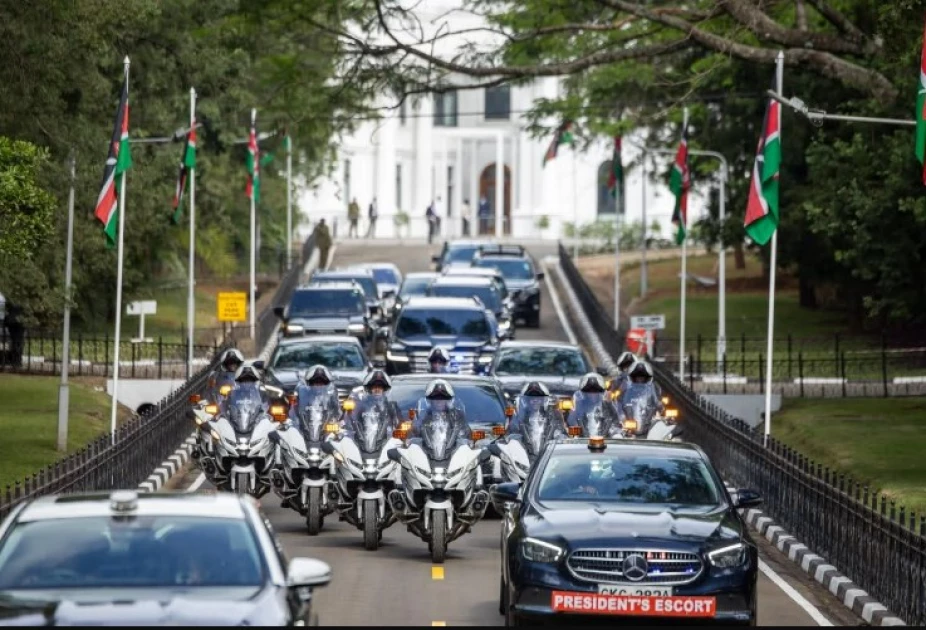
President William Ruto's motorcade heads to Nyayo Stadium, Nairobi, for Jamhuri Day 2025 celebrations on December 12, 2025. Photo/PCS

Audio By Vocalize
According to the Office of the Controller of Budget, State House alone consumed Ksh.202.96 million on fuel, the second highest expenditure among government entities, coming only after the National Police Service, which spent Ksh.377.65 million.
If the current trend continues, State House could record even higher fuel expenditure by the end of the 2025/26 financial year.
Government officials often travel with large entourages during official engagements such as project launches, meetings, and public events. When the President or Deputy President travels, logistical costs typically extend beyond vehicles to include security details, staff movements, accommodation, and other operational expenses.
Since President Ruto assumed office in September 2022, State House has utilised Ksh.1.092 billion on fuel, raising questions about the austerity pledge made by the Kenya Kwanza administration.
For instance, State House spent Ksh.481.39 million on fuel in the 2024/25 financial year, a notable increase from Ksh.407.92 million recorded in the 2023/24 financial year.
Further, the Office of the Deputy President of Kenya used Ksh.68.77 million on fuel during the first half of the 2025/26 financial year, placing it among the top government spenders in this category.
The office holder, Prof. Kithure Kindiki, whose nationwide empowerment programmes and frequent political engagements have seen him travel extensively across the country.
Kindiki has also been actively campaigning for candidates of the United Democratic Alliance (UDA) in recent mini-polls.
During this period, the once soft-spoken politician has increasingly adopted a combative political tone, popularising slogans such as "Fire si Fire" and "Wewe Goliathi". Critics argue the shift reflects the high-stakes political environment surrounding his role in government and party mobilisation.
Likewise, President Ruto's office recorded Ksh.26.85 million in fuel expenditure during the same six-month period. While lower than State House spending, the figure still contributes to the combined fuel bill incurred by the Presidency.
To put it into perspective, the vehicles consumed an average of 1.7 million litres of fuel, covering approximately 14 million kilometres during the period.
Overall, in FY 2025/26, the gross allocation to ministerial recurrent expenditure stands at Ksh.1.80 trillion, compared to Ksh.1.77 trillion allocated in FY 2024/25.
In the first six months of FY 2025/26, expenditure stood at Ksh.899.74 billion, including Ksh.881.50 billion representing 50 per cent of the annual gross recurrent estimates. This is markedly higher compared to the 24 per cent, equivalent to Ksh.433.89 billion, recorded during the same period in FY 2024/25.
The revelations come at a time when State House is set to spend Ksh.17 billion by the end of the current financial year, nearly double the Ksh.8.5 billion initially allocated at the beginning of the year.
Further, State House has requested Ksh.20 billion for the next financial year starting July 1, citing the addition of four new State lodges as a key factor driving the anticipated rise in expenditure.
The requests have raised fresh questions about government spending priorities, particularly at a time when many Kenyans continue to grapple with the high cost of living, increased taxation, and economic pressures.
The figures, however, are expected to increase, especially as the country approaches the 2027 General Election, where political activities increase, meaning fuel expenditure could rise further as leaders traverse the country for political mobilisation and campaign activities.
Join the Discussion
Share your perspective with the Citizen Digital community.
No comments yet
This discussion is waiting for your voice. Be the first to share your thoughts!