
DP Kindiki touts Kaptagat model as conservation blueprint
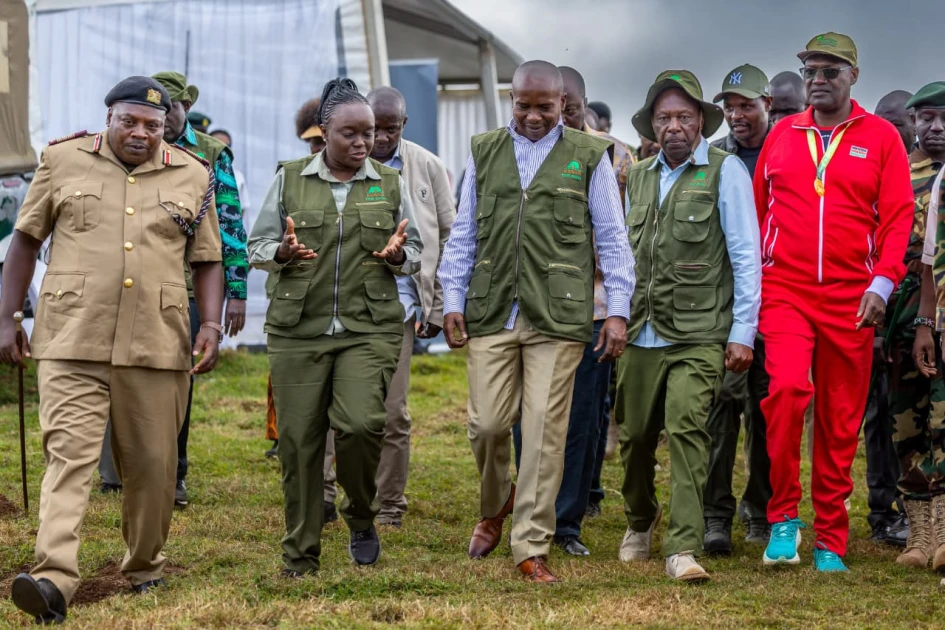
Deputy President Prof. Kithure Kindiki (centre) receives a progress brief on the Kaptagat Integrated Conservation Programme from the Cabinet Secretary for Environment, Climate Change and Forestry, Dr Deborah Barasa. Also present are Principal Secretary for the State Department for Forestry Gitonga Mugambi, Principal Secretary to the National Treasury and Patron of the Kaptagat Integrated Conservation Programme Dr Chris Kiptoo (R), and Elgeyo Marakwet County Commissioner David Kosgei (L).

Audio By Vocalize
The Deputy President spoke at Kaptargok in Elgeyo Marakwet County, where he joined residents from the six Kaptagat Forest Blocks: Kaptagat, Penon, Sabor, Kessup, Kipkabus and Elgeyo, to mark the programme's 10th anniversary through a tree-planting exercise and the launch of key livelihoods and government projects.
Prof. Kindiki said healthy forests are fundamental to Kenya's food and water security as well as economic development, commending the programme for integrating conservation with community empowerment.
"A good, and sound healthy environment is good for the community. I want to thank you, PS Kiptoo, for your work in environmental conservation," said the Deputy President.
He observed that the Kaptagat approach had demonstrated the importance of placing local communities at the centre of conservation efforts.
"This project, led by PS Kiptoo, ensures forest-adjacent communities are involved in environmental conservation. It is very important to involve the local community in the conservation of the environment. I thank you because the programme has livelihood empowerment for the surrounding community, who will help us conserve Kaptagat Forest. I have seen that the programme gives farmers grade cows so they can get more milk compared to what they are getting. I have seen others getting cooking gas, and many other livelihoods that will help them put money in their pockets, Pesa Mfukoni," he added.
The Kaptagat Integrated Conservation Programme was established 10 years ago after recognising that the long-term future of Kaptagat Forest depended on addressing the everyday challenges facing the people who lived around it.
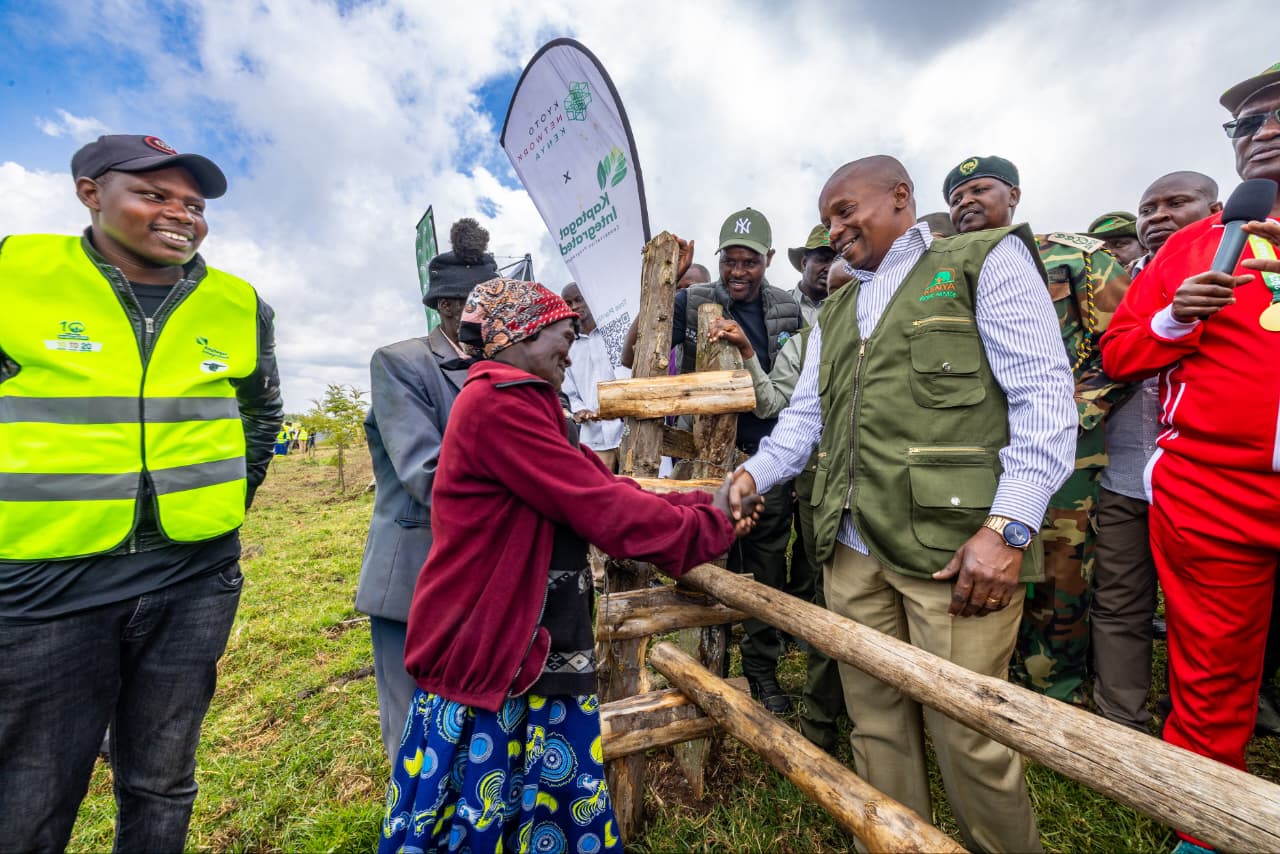
Rather than treating forest degradation as an environmental issue alone, the programme developed an integrated approach built around four thematic pillars, Mazingira Safi, Maji Safi Nyumbani, Kawi Safi Nyumbani and Pesa Mfukoni, linking forest restoration with clean water, clean energy, climate-smart agriculture and household income.
The programme's Patron and Principal Secretary for the National Treasury, Dr. Chris Kiptoo, said the past decade had demonstrated that conservation can become a driver of economic growth when communities directly benefit from protecting natural resources.
"This is an economy powered by the forest. Looking back on the10 years that I have served as Patron of the Kaptagat Integrated Conservation Programme, one lesson stands out: Never underestimate an economy powered by the forest. Never underestimate the impact of planting a single tree, and never underestimate the power of one person determined to restore a forest," said Dr. Kiptoo.
He said the programme's success lay in listening to the needs of communities and designing solutions around them.
"Today, I am proud of what those ten years have given birth to: Mazingira Safi, Maji Safi Nyumbani, Kawi Safi and Pesa Mfukoni. These are not just programmes; they are community-driven solutions born from listening to the very needs that once pushed people into the forest. As we celebrate ten years of impact and embark on our '10 to 20' journey, to restore more, sustain more and transform more, I believe the next decade will take us even further," he said.
World Wide Fund for Nature - Kenya (WWF-Kenya) Chief Executive Officer Jackson Kiplagat described the initiative as one of Kenya's most successful examples of collaborative conservation.
"The story of the Kaptagat Integrated Conservation Programme is proof that when communities, government, private sector, development partners and conservation organisations work together, degraded landscapes can be restored and livelihoods transformed," he said.
Kiplagat noted that over the past ten years, the programme has restored ecosystems, secured water sources, strengthened climate resilience and improved the wellbeing of thousands of households through its integrated approach.
"We join the Patron and stakeholders to celebrate this remarkable milestone that is not simply looking back at a decade of achievement, but also renewing our commitment to the next ten years of restoring, sustaining and transforming the Kaptagat ecosystem, which is both a national and global model of restoration," he added.
As the programme enters its second decade under the '10 to 20' vision, stakeholders say the focus will be to restore more, sustain and transform, reinforcing Kaptagat's position as one of Kenya's leading examples of integrated conservation for people, nature and the economy.
Join the Discussion
Share your perspective with the Citizen Digital community.
No comments yet
This discussion is waiting for your voice. Be the first to share your thoughts!