
Why African countries should consider boycotting the 2026 FIFA World Cup in the US
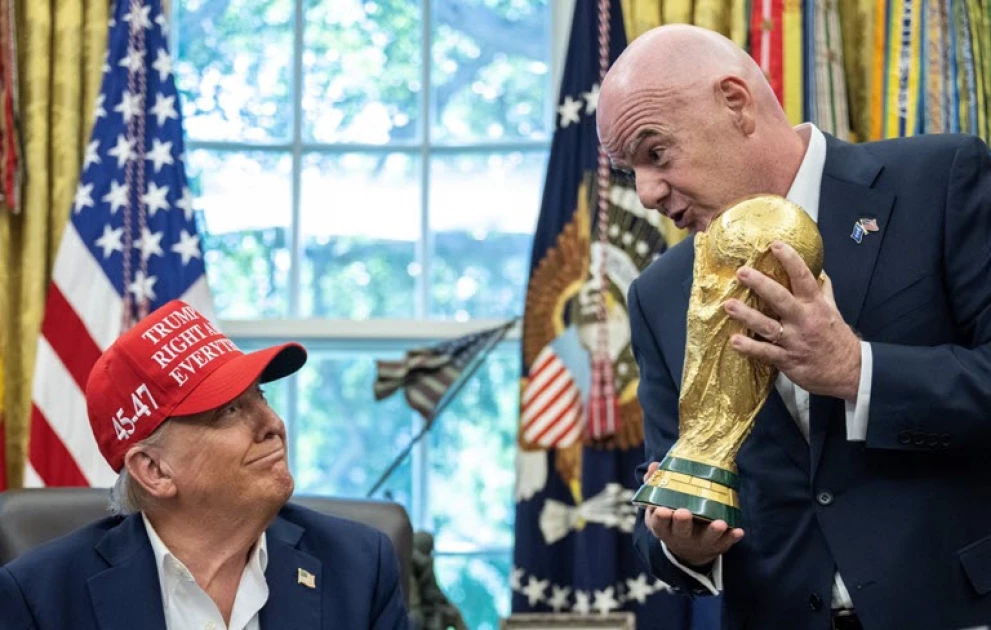
FIFA president Gianni Infantino (R) hands the World Cup trophy to US President Donald Trump in the Oval Office of the White House in Washington, DC, on August 22, 2025.

Audio By Vocalize
It is within this context that African nations should seriously consider a collective stance — including the possibility of a boycott — regarding participation in the 2026 FIFA World Cup, which will be hosted primarily by the United States.
Concerns surrounding immigration enforcement, border controls, and racial discrimination in the United States have been widely documented and debated globally. For African teams, officials, and supporters, these concerns translate into real anxieties about visa access, freedom of movement, and equitable treatment. Even the perception that African participants could face disproportionate scrutiny, exclusion, or hostility risks undermining the spirit of inclusivity that the World Cup claims to uphold.
International sporting events are not held in a vacuum. Host nations are expected to guarantee that all participants and fans — regardless of nationality, race, or economic standing — are treated with dignity and fairness. Where such assurances appear uncertain, affected regions have both the right and the responsibility to raise concerns collectively and forcefully.
Africa’s participation in global sporting events should reflect more than athletic ambition; it should also align with broader struggles for racial justice, equality, and respect. A coordinated response by African nations would signal that the continent expects host countries and governing bodies like FIFA to uphold universal standards of non-discrimination. Silence or passive participation, on the other hand, risks normalising exclusion and reinforcing long-standing inequities in global sport.
These concerns are amplified by persistent narratives that undermine Africa’s contribution to world football. Remarks by prominent figures in the sport — including Italian coach Gennaro Gattuso, who has previously suggested reducing the number of African teams at the World Cup — reflect an enduring tendency to marginalise African participation despite the continent’s immense talent and global impact. Such views, whether personal or institutional, reinforce the perception that African football remains undervalued in international decision-making.
A unified stance by African nations would therefore serve a dual purpose. First, it would assert Africa’s collective influence within global sporting institutions. Second, it would challenge FIFA to live up to its stated role as a custodian of opportunity, especially for young players across the continent whose dreams hinge on fair access to the world’s biggest stage.
Importantly, the consideration of a boycott need not be an end in itself. Rather, it can function as leverage — a means of compelling constructive dialogue among African institutions, FIFA, and the host nation. Such engagement could result in clear, enforceable guarantees on visa access, safety, and equal treatment for African teams and supporters. At minimum, it would force a reckoning with concerns that have too often been dismissed or deferred.
Africa’s voice in global affairs is strongest when it is principled, coordinated, and unapologetic. As the world turns its attention to the 2026 World Cup, African nations have an opportunity to assert that participation in global celebrations must never come at the cost of dignity, equality, or respect.
Kimungu Mbugua
A concerned African
Leave a Comment