
Patients stranded in Nairobi as nurses, lab technicians join health workers’ strike
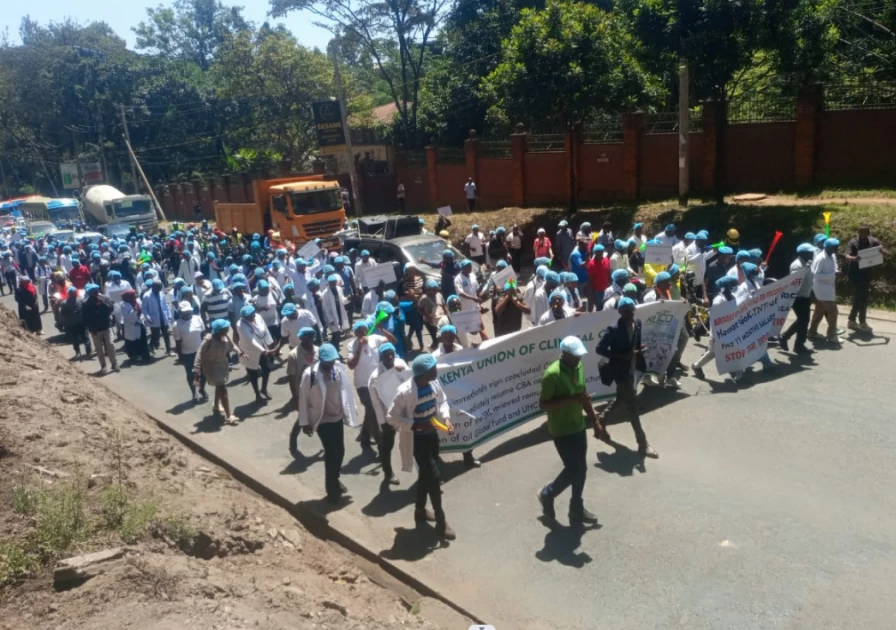
Health workers in Nairobi march during the ongoing strike on January 16, 2026. PHOTO | COURTESY

Audio By Vocalize
Health services in Nairobi have been completely paralysed
after nurses and laboratory technicians joined clinicians and doctors in the
ongoing strike.
The industrial action by all cadres of health workers, over
what they term incessant salary delays, has forced cash-strapped hospital
administrators to engage medics on a locum basis to keep services running.
Some say they are being forced to choose between buying drugs
and other medical commodities for their facilities and paying doctors.
The Nairobi County government has termed the strike illegal
and directed healthcare workers to resume work within 12 hours or face
disciplinary action.
First to down their tools were doctors, who have been on
strike since December 18. Clinical officers soon followed on December 23, and
25 days later, nurses and laboratory technicians have also downed their tools,
effectively declaring a total shutdown by all healthcare workers in Nairobi County.
Hospitals such as Mbagathi Level 5 Hospital have been
straining under the weight of the industrial action. Being a referral hospital,
the facility is unable to keep up with the influx of patients.
The aftermath is evident in long queues with minimal to no
service and deserted hallways as doctors and nurses stay away.
At Mutuini sub-county hospital in Dagoretti South, patients
can still access healthcare, but at a great financial cost to the facility’s
management, which has been forced to engage medics on locum to ensure services
continue.
“One of the things that has really affected us as an
institution is having to look for money to pay locum staff so they can sustain
us during this strike. We have deliberately put some doctors on locum. We have
four doctors on locum and three anaesthetists for theatre, so our theatre is
operational 24 hours, and we are able to handle all emergency cases,” said
Mutuini sub-county hospital CEO Dr Martin Wafula.
Healthcare workers in Nairobi have accused Governor Johnson
Sakaja’s administration of consistently failing to address their welfare,
leading to recurring and protracted strikes and significant disruptions to
public health services.
Patients most impacted by the strike are those living with
chronic illnesses.
“One of the other things we are worried about is patients with
chronic diseases because we are not able to access consultants, since they are
also on strike. That has a ripple effect on their health, and we will have to
come up with systems to mitigate this once the strike is over,” Dr Wafula
added.
The Sakaja administration has urged the striking workers to
resume duty and issued ultimatums threatening disciplinary action.
However, union officials maintain they will not return to work
until all outstanding payments are cleared and their grievances are addressed
with tangible action.
They say the Sakaja administration has precipitated more
industrial action by healthcare workers than previous administrations.
Leave a Comment