
OPINION: ODM can avoid disunity and build consensus on how to approach 2027 election
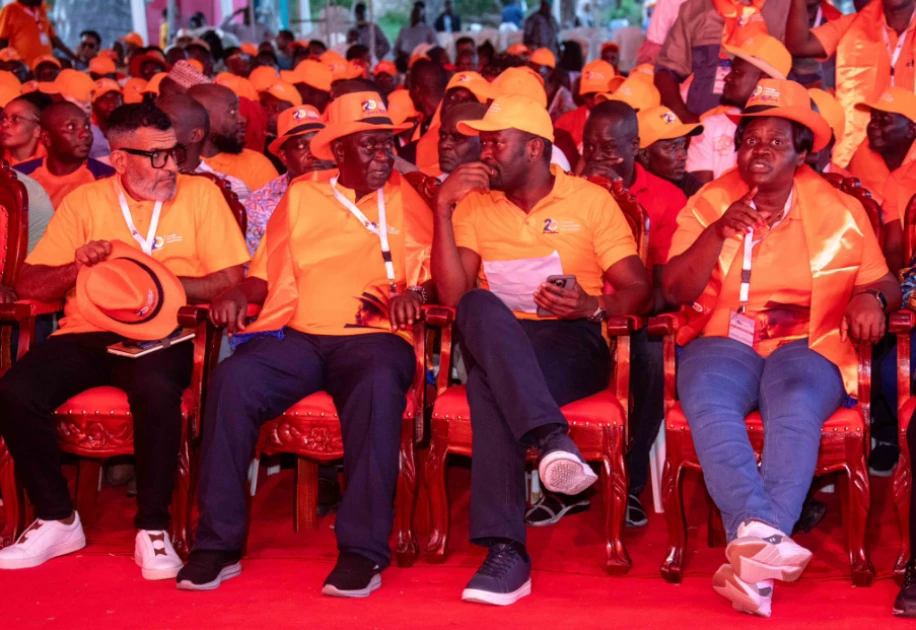
ODM DPL Abdullswamad Sheriff Nassir, Party Leader Oburu Oginga, SG Edwin Sifuna, and National Chair Gladys Wanga in Mombasa for the 20th anniversary celebrations on November 13, 2025. PHOTO | COURTESY

Audio By Vocalize
I listened to all the speeches during the celebration of
ODM’s 20th anniversary and followed closely the subsequent statements by
different leaders. Interestingly, there is consensus on most issues except one:
at the core of the disagreement is whether ODM should join the opposition or
remain within the broad-based government arrangement for the sake of the 2027
election.
Which choice will give ODM a solid grasp of power? In
contrast to the past, this decision is critical to the party’s survival
because, without Raila, ODM may not be invited into post-election coalitions. A
commonly neglected reality is that it was Raila’s charisma and massive support
base that forced previous governments to accommodate him after elections.
There are many views among ODM leaders and supporters on how
to move the party from the margins to the centre of government. I observe that
there are no major areas of disagreement, and that some of the fierce debate is
justified and expected as part of the transition following the loss of the
party leader. This means that ODM can easily find consensus on the one or two
contentious areas. Therefore, unity within the party is possible.
In my analysis, the various opinions stem from a shared core concern: the desire for ODM to remain a distinct and strong party while working in coalitions with other political parties for the sake of the 2027 elections. Both sides also want a united ODM and oppose divisions within the party.
I
interrogate the idea of working with the opposition and question how, under the
shadow of opposition unity, ODM would be willing to negotiate with His
Excellency Rigathi Gachagua, who has emerged as the natural leader of that
team. I see more validity in ODM working with the broad-based government to
achieve its goals, for the reasons outlined below.
In making a choice on which side to align with, ODM should not assume that its supporters are static. The decision must be made with the reality of a shifting political terrain in mind. The various projects and the 10-point agenda between the President and the late Raila have already led to some emancipation, dignity, visibility, and inclusivity, helping to change unfair structures that create and sustain inequality in perceived opposition zones.
One year of cooperation between President Ruto and Honourable Raila has
already moved a majority of ODM supporters toward the broad-based arrangement.
Therefore, this decision is not being made in a vacuum, but within a context
where there is already significant alignment with the government. Any abrupt
move back to the opposition may leave many ODM members behind.
The ODM Party should avoid historical mistakes that have
repeatedly relegated it to the opposition. This is critical if the party is to
avoid another misstep that condemns it to the political wilderness. ODM should
not engage in opposition politics for its own sake. While being in opposition
may not significantly affect the personal wellbeing of a governor like James
Orengo, who continues to enjoy the benefits of office, it makes a substantial
difference to the communities they serve. Canaan is a powerful metaphor
for where the hearts of ODM members lie, but rhetoric without a concrete plan
will not deliver them to Canaan.
The rhetoric of never compromising is convenient for a few leaders who resist adaptation. However, there is ample evidence to show that working with opposition parties as a pathway to power has not yielded much success for ODM in previous elections.
I therefore question the source of
confidence among those who believe the opposition can capture power in 2027 and
consequently make ODM part of the next government. I challenge supporters of
the opposition route to demonstrate how their idea differs from past strategies
and thinking within the party—strategies that have been shaped by traditional
voting patterns and trends defining previous presidential elections.
Interestingly, both sides generally agree that they do not
wish to remain in opposition after 2027. They also agree with Raila’s long-held
vision that ODM cannot be a perpetual opposition party. It is therefore
important to discuss the most viable path for ODM to be part and parcel of the
2027 government.
Working with the opposition is closely tied to ODM’s
identity and self-image. For some, the idea of working alongside the government
creates discomfort and anxiety, given decades spent as a formidable opposition
party. Yet both sides readily agree that opposition politics has been a poor
guardian of regional development interests. ODM strongholds have suffered
economic, political, and other long-standing harms. There has been systematic
damage at both individual and communal levels in areas traditionally considered
opposition zones.
Attempting to join the 2027 government through an opposition
alliance may fail and once again leave ODM trapped in opposition politics.
There are other minor areas of disagreement within the party, but my concern
remains the core disagreement. The party leadership therefore has a great
opportunity to build consensus around the many areas of agreement and resolve
the single major point of contention. Since all sides agree that the primary
goal of a political party is to gain power, the key question becomes: which
path is most viable, based on historical trends and past election outcomes?
The minority pushing the party to join an opposition coalition have yet to demonstrate how this route offers a clear path to forming the next government. Because a few leaders are opposed to working with the government, friction has also emerged around the question of party leadership.
However, the leadership issue flows from the core disagreement and is not a
standalone problem. In my view, leadership transition is not a major area of
contention. Indeed, it appears that both sides agree that Raila’s replacement
should come from within the Odinga family. A few dissenters may not accept this
reality and may eventually leave the party altogether. Ultimately, there must
be a leader; not everyone can occupy the top position.
Even the question of whether ODM should field a presidential candidate appears to be more of a negotiation tool—a bid for leverage and counter-offers—rather than a deal-breaker. Much of the disagreement is focused on the short-term goal of the 2027 election, with little attention paid to long-term issues beyond it.
Of course, it would be naïve to assume that the
debate around 2027 is not also a dress rehearsal for the politics of
identifying the next kingpin after the demise of Honourable Raila Amollo Odinga.
The good news is that the conversation around the next kingpin is not
restricted to ODM alone and will ultimately depend on individual effort and
political skill.
I suggest that the only way to make sense of the many
proposals is for the various factions to sit together and define a common
interest. That common interest must be clearly articulated. For example, what
is the common interest of the Luo Nyanza people? This shared interest must be
central to the debate, rather than individual leaders’ ambitions and survival
strategies disguised as community interests and unity.
From the foregoing discussion, it is clear that there is no fundamental disagreement within ODM. Working with the government does not contradict ODM’s principles and values. Whichever choice the party makes could lead to its collapse, rebirth, or renaissance.
Like any great institution, ODM must continue to innovate, adapt, and avoid rigid adherence to traditional short-term strategies. I suggest that the party first map out its common interests and then identify the most viable path to achieving them. ODM may have differing views and ambitions, but it must place the interests and welfare of its members first if it is to survive as a significant political force capable of delivering economic justice and leaving no one behind—as articulated in the 10-point agenda between President Ruto and former Prime Minister Raila Odinga.
Leave a Comment