
OPINION: How unsupervised ADR at KRA has become a silent engine of revenue loss
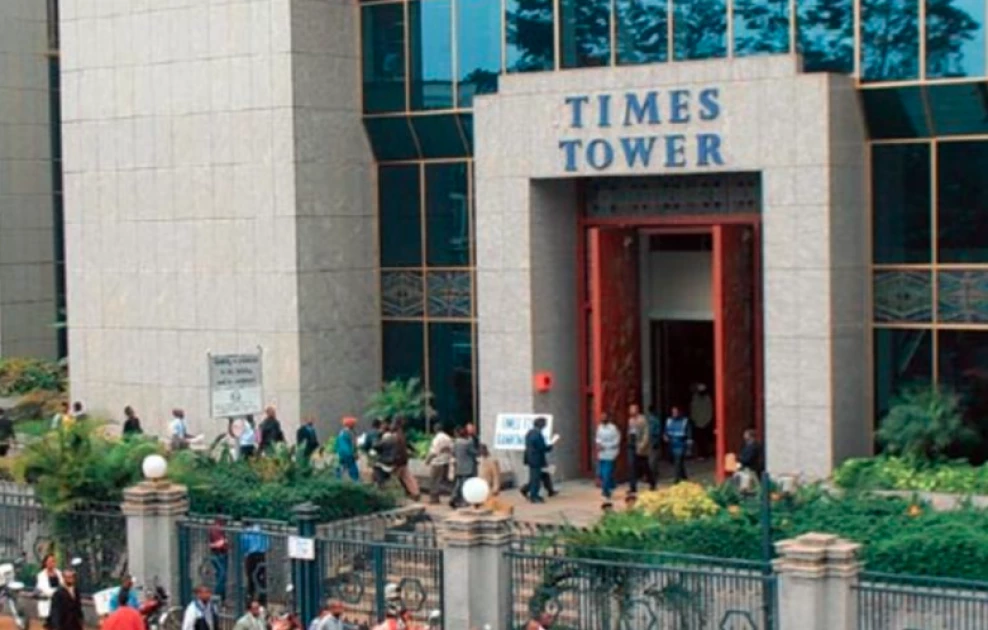
Kenya Revenue Authority headquarters at Times Tower.

Audio By Vocalize
There is a quiet scandal unfolding within Kenya’s tax administration, and it is costing the country billions of shillings. It does not involve new tax laws, parliamentary drama, or high-profile policy shifts. It is happening silently, procedurally, and largely out of public view—through the unsupervised application of Alternative Dispute Resolution (ADR) at the Kenya Revenue Authority (KRA).
ADR was introduced as a progressive mechanism intended to
resolve tax disputes efficiently, reduce litigation, and promote fairness. In
practice, however, it has evolved into a major point of revenue leakage. What
was designed as a safeguard for public revenue has, in many cases, become a
conduit through which that revenue quietly drains away.
KRA raises an assessment, often grotesquely inflated. Ksh.1
billion. Ksh.500 million. Ksh.10 million. Not necessarily because such
liability genuinely exists, but because shock and fear are effective tools of
coercion. The objective is not enforcement; it is leverage. Once the taxpayer
is driven into ADR, the figures begin to collapse in ways that defy law, logic,
and fiscal prudence.
By the time a consent is filed at the Tax Appeals Tribunal
(TAT), an assessment that once threatened the very survival of a business has
miraculously disintegrated—sometimes to a fraction of its original value,
sometimes to nothing at all. Nil.
How does a lawfully issued tax assessment simply evaporate
without consequence?
ADR negotiations are conducted behind closed doors. There is
no judicial supervision, no public scrutiny, and no meaningful institutional
oversight. When the resulting consent is presented to the Tribunal, the court
does not interrogate its substance. It merely records what the parties have
agreed. Even where the compromise appears fiscally reckless or plainly
indefensible, the Tribunal has little option but to adopt it.
This absence of oversight creates fertile ground for
corruption.
The real bargaining is often not about establishing the
correct tax liability. It is about private arrangements that benefit
individuals while depriving the State of lawful revenue. Inflated assessments
create room for “concessions”. Concessions create room for inducements. And
inducements quietly convert public funds into private gain.
This is precisely why the Ethics and Anti-Corruption
Commission (EACC) must examine how ADR consents at KRA are arrived at. Who
initiates exaggerated assessments? Who negotiates their collapse? Who
authorises consents that wipe out colossal liabilities? And who ultimately
benefits?
If the National Treasury is serious about revenue mobilisation, it need not invent new taxes or further burden already compliant taxpayers. It needs to seal this single loophole.
Addressing corruption at the assessment and ADR stages would
raise billions in additional revenue—simply by enforcing integrity within
existing systems. Few policy interventions offer such high returns at such
minimal cost.
Leadership must come from the Directorate of Budget, Fiscal
and Economic Affairs at the National Treasury. Legislative reform is
unavoidable. ADR should not be abolished—it remains a valuable and legitimate
tool. But it must be supervised. Clear monetary thresholds must be established.
Independent reviews must be mandatory. Judicial oversight must be introduced.
Comprehensive audit trails must be enforced.
Consider a common scenario.
A taxpayer is assessed Ksh.10 million. Through ADR, the
correct liability is established at Ksh.6 million. Instead of collecting the
lawful amount, the assessor allegedly demands a Ksh.4 million bribe. The
taxpayer pays Ksh.2 million unofficially, the file is closed, and the State
loses Ksh.4 million outright—while corruption thrives.
This is not an isolated incident. It is a system. And
systems do not reform themselves.
ADR is a powerful instrument when properly governed. When
left unchecked, it becomes a conveyor belt for corruption and a direct threat
to fiscal stability. Kenya cannot afford this silence.
For accountability.
For the protection of national revenue.
ADR at KRA must be supervised—and urgently so.
The writer, Maliba Arnold Nyajayi, is Executive Director, The Open
Future Hub (OFH).
Leave a Comment