
Kenyan creators betting on AI models to produce hit songs as copyright puzzle lingers
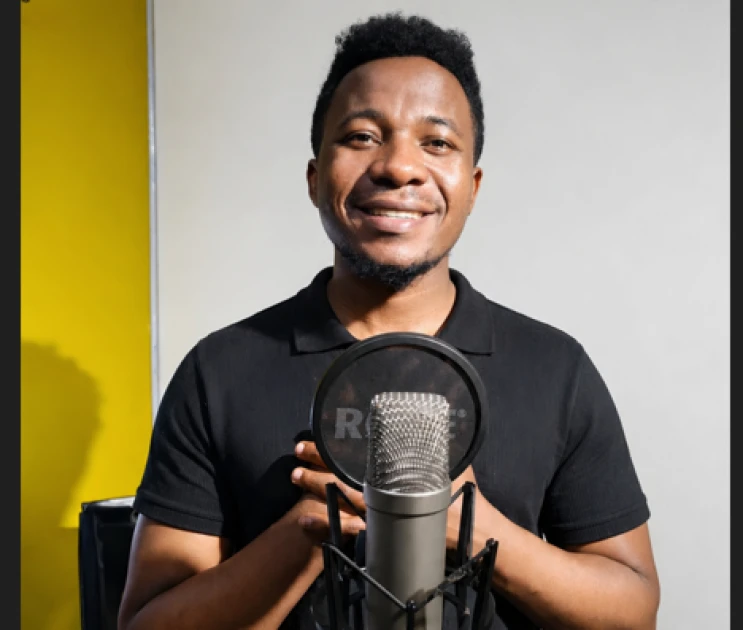
Ruben Idy, a musician who produces music using AI at his studio in Nairobi. Photo: Handout

Audio By Vocalize
AI is changing art, and maybe music, the way we are accustomed to hearing it through lyrical and vocal mastery.
For years, the music industry has been dominated by known producers, musicians and instrumentalists, who use their lyrical skills and captivating voices to attract listeners.
Machines have now entered the scene, as AI-powered Large Language Models (LLMs), Machine Learning systems and multimodal generative AI systems are utilising existing data from human singers to produce captivating music.
Today, you are likely to see a song with the name of an artist you least expected. Like a collab between Cardi B and Nicki Minaj :) Very unlikely! You either are late at recognizing that it is AI-generated, or never at all.
This trend has seen creators in Kenya give new life to popular hit songs through remixes and covers. In some cases, the creators are using AI tools to create videos of well-known songs that lacked detailed videos or to bring modernity to the old-school videos of these songs.
Globally, creators have come up with AI-generated and AI-assisted songs distributed through platforms including YouTube, Spotify, Apple Music, DistroKid, among others. These platforms accept AI-generated music or AI-assisted music with a disclosure from the distributor or creator.
In Kenya, there is a boom in AI-generated and AI-assisted music, where a variety of tools are used to generate lyrics, videos, instrumentals and rhythm for songs. This has seen well-known classics return to local ‘billboard hits’.
This is common with gospel music hits, where artists are creating covers and remixes using AI. In some cases, they create new songs altogether using AI tools.
A case in point is the Malebo song by Pastor Faustin Munishi, a classical gospel song that was released over 14 years ago.
An AI-assisted remix of the song recently made a return, bringing a new feeling to the well-known classical. While Munishi’s original video features him in a studio while playing an accordion, the AI-assisted remix featured an African-themed dance with multiple location settings.
Its creator, James Ndwaru, says the reception of the song by Kenyans was a surprise.
Over 9 years ago, Kenyan singer Moses Sirgoi released ‘Final Say’, a hit that has since dominated praise and worship circles.
Through AI, the hit song has now experienced a rebirth through a cover that has since gathered over 2.5 million views just 3 months after it premiered on YouTube.
The AI-assisted song was also made by Ndwaru, who for a long time had interests in music, but had not successfully entered a studio to produce one.
The AI-generated and AI-assisted music trend has seen a crop of Swahili mixes and worship songs, which are attracting viewership and listenership on YouTube and other platforms.
Ruben Idy, a gospel musician in Nairobi, has also ventured into using AI to produce and reproduce songs.
Through his channel IRStudio Live, Idy publishes AI-generated songs and AI-assisted covers of popular Swahili praise songs. His remix of ‘Ndio Bwana’ has amassed more than 3 million views on the platform.
The creator owns a production studio in Donholm, Nairobi, and has a recorded album released in 2018.
However, the musician had for a long time been sitting on multiple drafts until the entry of AI-assisted music production.
“Initially, the YouTube channel focused on spontaneous worship sessions recorded at my studio. We would host live worship sessions where people came and sang live, and those are the kinds of videos we posted from the beginning, along with some songs. It was only recently, around last year, that I started mixing in some AI-generated covers,” Idy tells Citizen Digital in an interview.
According to Idy, who holds music certifications, it takes a musician to produce a good song using AI. He argues that apart from basic prompting skills, it is necessary to have knowledge of music to be able to achieve lyrical rhythm and use the right instrumentals.
He therefore mixes his music skills with AI output to come up with a song.
“I include AI depending on the kind of sound I want to achieve. I decide whether AI will improve the result or not because sometimes you can use AI and still not get the sound you want. In those cases, I prefer producing the music naturally,” says Idy.
The same sentiments are shared by Ndwaru, who argues that it takes a person with musical knowledge to create a good song using AI. For this creator, understanding the lyrical flow of a song is more important than basic prompting skills.
“There's a way you enhance the lyrics for arrangement so that when you give the AI tool the lyrics, it will produce them in a way that is musical,” Ndwaru says.
Both Idy and Ndwaru use AI tools to create remixes and covers of existing hits, or create totally new songs. Notably, they do not fully use AI tools, as they have to rely on production tools such as Adobe to enhance the quality of their productions.
Betting on AI models
The Kenyan creators bet on multiple AI models to create remixes and covers of existing hits or generate new music ideas.
For instance, Ndwaru relies on more than one tool, as he has a preferred model for lyrics generation, tuning, creating instrumentals or digitising melodies he sings himself.
The creator uses conversational chatbots such as ChatGPT and Gemini to generate song lyrics. Afterwards, he uses tools such as Suno AI to generate unique tracks.
When creating videos for the tracks, the creators rely on video-generation models such as Grok Imagine and Google’s Veo, among other models.
In some cases, the creator has to sing a hymn themselves for the AI model to enhance it.
However, getting a good AI-assisted tune is not just a tap of a prompt. It involves identifying the best models for specific tasks and the specific tasks that will require human takeover. This can range from organising lyrics to achieve a rhythm and post-production edits to achieve a good sound and video quality.
But there is more than identifying a good model. A creator has to part with a few coins to get the best out of the models they are using to generate AI-assisted songs. They have subscribed to the premium packages offered by AI companies.
“You have to pay monthly. If you use the free versions, the quality is lower, and you may not have ownership rights over the songs you generate. Even if the song is your own, generating it using a free plan may mean that you do not fully own the rights,” says Idy.
In a breakdown of his expenditure on AI models, Ndwaru says he has to part with about 150 USD (approximately 19,374) in a month to pay for subscription fees for multiple models.
“The cost rises because, for editing, you also need tools like Adobe Premiere Pro or CapCut. You have to subscribe to CapCut Premium to access all the premium features,” remarks Ndwaru.
The creators also recognize model weaknesses, such as hallucinations or limited capabilities. These weaknesses might be due to the limitations in a model’s training data, its prompt design, integration complexities, concept drifts or other compounding errors.
Therefore, it takes a ‘take one ’, ‘take two’ … or even ‘take three’ for these creators to get a desired musical tune.
“AI itself can generate a song quickly, but getting the exact sound you want is another matter. Sometimes you can spend four hours working on one song and still abandon it because the output does not match what you had in mind,” says Idy.
The creators recognize that paying for premium plans is not a magic bullet to avoiding hallucinations and other model weaknesses.
Despite improved capabilities of audio and video generation models, some weaknesses can still be seen in outputs – even under premium plans.
“What happens with AI is that the coherence of the idea starts to fade when you go beyond about 30 seconds. It gets mixed up. It doesn't give you quality because it has to do so much within a short duration. So even on paid plans, that limitation still exists to some extent,” notes Ndwaru.
While you fall in love with AI-generated music or AI-assisted renditions of your classical hits, a battle simmers within the music industry.
Who owns AI-generated music? Is AI robbing musicians of their source of income? Is AI biting a slice of the music industry’s cake?
In February 2026, nearly 1000 musicians joined hands to protest AI companies using their work to train models. This saw the artist release a silent album as disapproval of UK government's planned changes to copyright law, which they say would make it easier for AI companies to train models using their work without a licence.
Paul McCartney, one of Britain’s most celebrated musicians, joined the protest with a track of an almost empty recording. The Four Five Seconds hitmaker expressed concerns over an AI takeover, especially its effects on young composers.
Citizen Digital spoke to Sharon Wata, the Deputy Executive Director at the Kenya Copyright Board (KECOBO), who said Kenya’s copyright laws do not have provisions on AI. However, there are precedents from jurisdictions such as the European Union and the United States.
Wata argues that copyright laws would apply differently to music that is fully AI-generated and to music that is AI-assisted.
“With the AI-assisted, you may claim copyright, but you have to show that there's a sufficient degree of human creativity involved. But with purely AI-generated content, you would not claim copyright. Why? Because ownership of IP or copyright is usually awarded to a person,” says Wata, an advocate of the High Court of Kenya.
Creators have to therefore seek permissions from the original owners of the songs.
“For all remixes and cover songs, you need permission from the owner, whether they are AI-generated or not. Get a license to do the cover,” explains Wata.
Such licenses ensure that original owners of creative works can still benefit financially from that cover or remix.
Copyright battles are a daily dilemma for Idy and Ndwaru, who have to manoeuvre seeking consent of artists and complying with platform guidelines to avert copyright strikes.
Ndwaru shares that in some cases, he has had to seek consent from artists to create AI-generated renditions of their songs.
A case in point is when he had to seek consent from singer Rozy Ohon before creating an AI-assisted rendition of her song ‘He has given me’. Rozy welcomed the idea, the creator says. The cover has since gathered over 60,000 YouTube views, 2 months after its release.
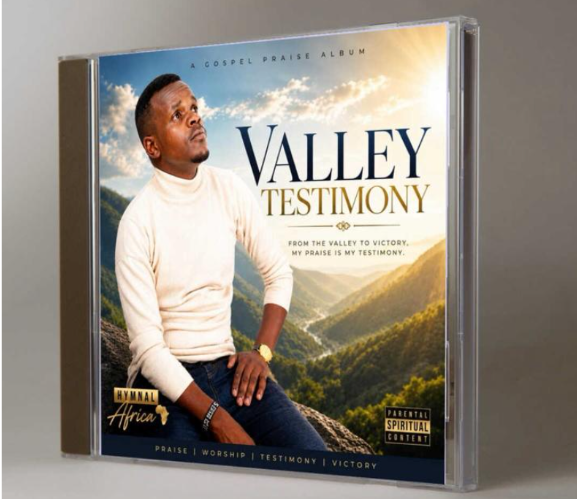
Ndwaru, who through his Hymnal Africa channel released a cover of Munishi’s Malebo, has struggled with platform strikes on copyright grounds.
Munishi would later urge young artists to use AI to create their own songs.
In a social media post in June, Munishi said ‘Vijana, acheni uvivu wa kubuni. Tungeni nyimbo zenu.’ He described AI-assisted music production as ‘theft’. “Mnachukua ujambazi kwa kuchukua nyimbo zangu na kuzipeleka AI,” said the singer, betting on ‘original intelligence’.
The creators, therefore, have to understand more than AI prompting. They have had to learn about copyright laws and how to avert infringement.
As such, Ndwaru has begun to work with music distributors who can help him overcome the ownership hurdles.
The creator also says he is in the process of registering his studio names Hymnal Africa and ‘House of Worship ke’ as Intellectual Property to stay ahead of the copyright game in the AI era.
“The biggest challenge I faced was that, when I started, I was operating from a point of limited resources and limited information. I also didn't know the songs would become so popular, so I wasn't prepared for what came afterwards,” says Ndwaru.
He, too, has been affected by copyright claims made on his AI-generated works.
“The songs went viral, and people who understood music distribution took many of my songs and uploaded them to platforms like Spotify and Apple Music as if they owned them,” he shares.
According to the creators, Kenyans are having a good reception towards AI-generated music. As faithfuls, Idy and Ndwaru are optimistic that AI is not only a tool to create melodies but also to fulfil their ultimate purpose of spreading the gospel through music.
Join the Discussion
Share your perspective with the Citizen Digital community.
No comments yet
This discussion is waiting for your voice. Be the first to share your thoughts!