
'How I gather my intelligence': Gachagua explains his network of sources
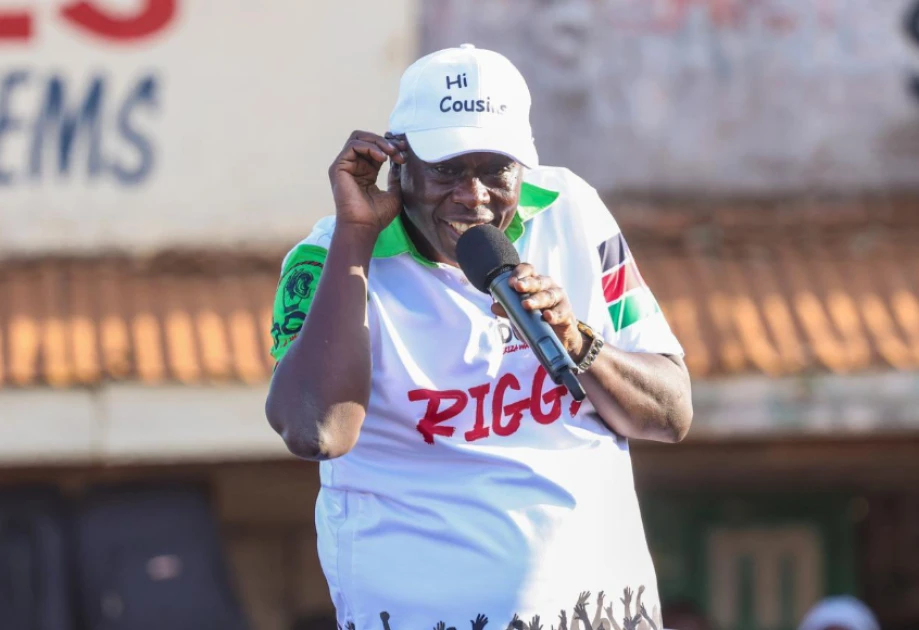
DCP party leader Rigathi Gachagua gestures during a rally in Malava, Kakamega Constituency, on June 112, 2026. PHOTO | COURTESY

Audio By Vocalize
Speaking during a podcast interview with political analyst Herman Manyora on Friday night, Gachagua said his sources include civil servants, police officers, National Intelligence Service (NIS) personnel and employees of state corporations, whom he urged to provide only information that can be independently verified.
"I have asked civil servants, police officers, National Intelligence Service officers and people working in parastatals to preserve my credibility by giving me information that is verifiable," Gachagua said.
He added that protecting the identity of his sources is central to maintaining the flow of information.
"I also have a lot of information and I sometimes don't rush into it. I do a lot of cross-checking because the day I mislead Kenyans, I'll lose my credibility," he said.
Gachagua cited his recent claims regarding the renewal of the British Army Training Unit Kenya (BATUK) agreement as an example of how information reaches him.
According to Gachagua, individuals he described as emissaries sought him out over a weekend and discreetly shared information they believed was in the public interest. He said he advised them on how to meet him without attracting attention before presenting the claims publicly.
The former deputy president reiterated allegations he has previously made that senior government figures sought a bribe from British officials during discussions over the renewal of the BATUK agreement. He claimed the information prompted him to speak out, after which the agreement was eventually renewed.
He further claimed that MP Nelson Koech, who chairs the National Assembly's Defence, Intelligence and Foreign Relations Committee, was later sent to explain the delay in renewing the agreement.
The allegations have been trashed by Koech and the government, with Koech saying the licensing delay was attributed to concerns over the legal framework governing British troops operating in Kenya, including issues of legal jurisdiction, immunity and accountability.
Gachagua maintained that his decision to disclose information is guided by what he described as a responsibility to inform the public rather than use sensitive information for personal gain.
"If you give me information, it will be in the public domain within a short time. I will not use it to extort money or blackmail anybody," he said.
The remarks come as Gachagua has increasingly relied on public interviews and political rallies to make claims about the inner workings of government following his fallout with President William Ruto's administration.
During the interview, Gachagua also used another recent claim to illustrate what he described as the reliability of his information network. He referred to his assertion, made hours before President William Ruto's State of the Nation Address, that the Head of State would unveil a "Vision 2060" development blueprint. When President Ruto subsequently announced a plan for a new trajectory for Kenya during the address, Gachagua cited it as further proof that his sources provide him with accurate information.
Join the Discussion
Share your perspective with the Citizen Digital community.
No comments yet
This discussion is waiting for your voice. Be the first to share your thoughts!