
Court dismisses petition to declare National Prayer Breakfast held at Safari Park unconstitutional
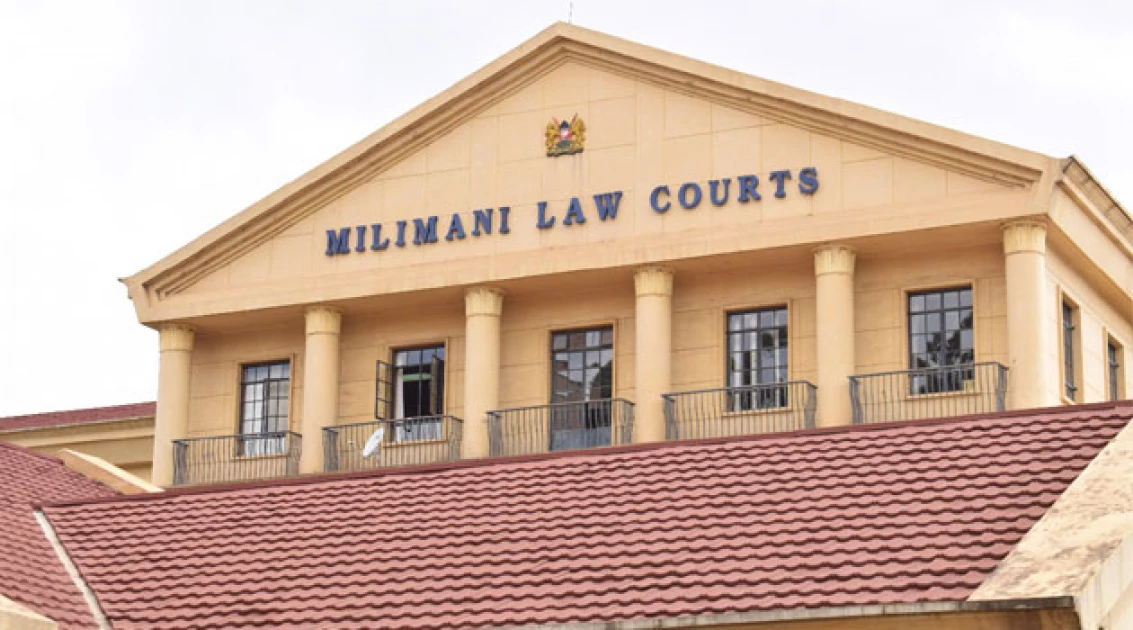
A file image of the Milimani Law Courts in Nairobi. PHOTO| COURTESY

Audio By Vocalize
The High Court has dismissed claims that the annual National Prayer
Breakfast held at the Safari Park Hotel is unconstitutional and discriminatory,
ruling that the venue is reasonably accessible and that the event is broadcast
to the public.
The court further held that the petitioner failed to properly plead and
prove that the event violated Article 8 of the Constitution on the separation
of religion and the State.
The judge noted that although parties extensively submitted on whether
the National Prayer Breakfast amounts to establishment of a State religion, the
issue had not been specifically pleaded in the petition.
“Submissions are not pleadings,” the court said, adding that it could
only determine issues that had been formally placed before it.
The court observed that the petitioner had the opportunity to amend the
petition to include claims under Article 8 but failed to do so before judgment.
“As serious questions on the constitutionality of the National Prayer
Breakfast were raised in the submissions, the same must be the subject of a
separate inquiry and not this petition,” the judge ruled.
On claims that holding the event at Safari Park Hotel was discriminatory
and violated Article 27 of the Constitution, the court found no evidence of
unfair discrimination.
The respondents told the court that the venue had been identified
through a procurement process compliant with Article 227 of the Constitution
and that the event was accessible to the public through live broadcasts.
“It should appear to me that the event is reasonably accessible and that
inputs have been made to broadcast the same,” the judge stated.
However, the court found that the petitioner’s rights to access
information and fair administrative action had been violated after the
respondents failed to provide information sought in a letter dated March 13,
2025.
The court ordered the national assembly to jointly or separately
provide the requested information within 30 days in a format accessible to lay
persons.
The judge further found that the Commission on Administrative Justice
acted diligently and promptly in responding to the petitioner’s complaints and
could not be faulted.
The case had been filed by lawyer Lempaa Suyiaka who sought to
block Parliament from organizing the 2026 National Prayer Breakfast using
public funds.
He argued that using state resources for the event violates the
separation of powers.
Join the Discussion
Share your perspective with the Citizen Digital community.
No comments yet
This discussion is waiting for your voice. Be the first to share your thoughts!