
AU launches drive to end devastating livestock disease across Africa

Audio By Vocalize
Yet a highly contagious disease, Peste des Petits Ruminants (PPR), continues to threaten herds across the continent, causing significant losses for smallholder farmers and pastoral communities.
Outbreaks of PPR can wipe out entire flocks within weeks, undermining livelihoods and disrupting local and cross-border trade.
Women and young people, who often manage small livestock, are among the most affected.
The disease also poses risks to wildlife, particularly in regions where domestic animals interact with wild species, and spreads easily in areas with high animal mobility and seasonal migration.
“PPR is not just an animal health issue,” said Dr Huyam Salih, Director of the African Union Interafrican Bureau for Animal Resources (AU-IBAR).
“It is a development challenge that directly affects livelihoods, nutrition, trade, and economic stability.” She noted that without coordinated action, the virus will continue to circulate, particularly across borders.
Despite its devastating impact, PPR is considered one of the few livestock diseases that can realistically be eradicated. Vaccines are available, diagnostics are reliable, and surveillance systems are proven.
Africa’s past success in eliminating rinderpest demonstrates that large-scale eradication is achievable with strong governance, political commitment, and coordinated implementation.
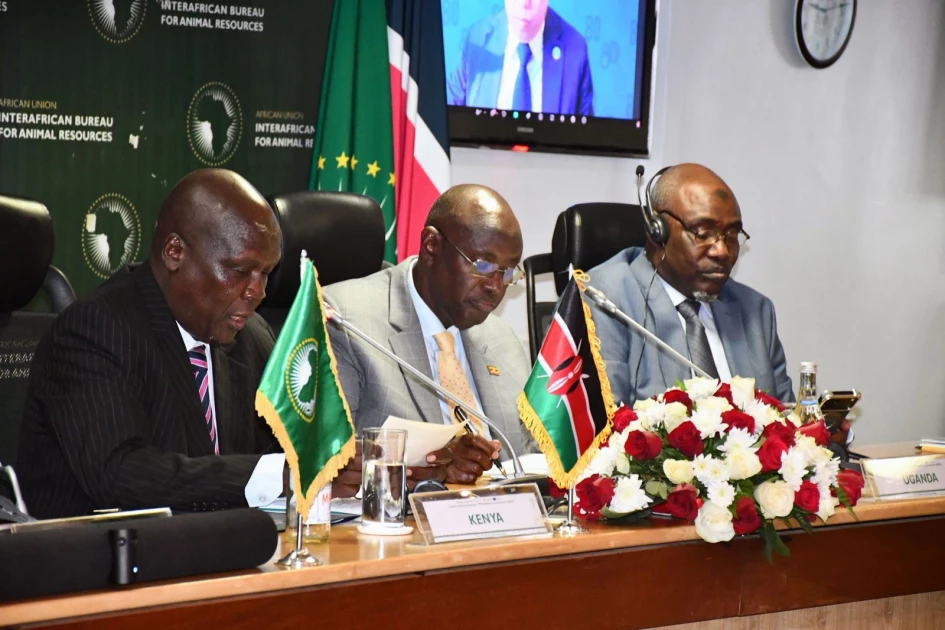
In response to the ongoing threat, the Continental Advisory Committee for the Eradication of PPR was launched today in Nairobi.
The committee forms part of the Pan-African Programme for the Eradication of PPR, which is coordinated by AU-IBAR in collaboration with the Food and Agriculture Organization of the United Nations (FAO) and the World Organisation for Animal Health (WOAH).
The advisory committee brings together political leaders, representatives from Regional Economic Communities, technical institutions, development partners, researchers, private sector actors, and civil society.
Its role is to provide strategic guidance, align continental and regional actions, review progress, and advocate for sustained resource mobilisation to achieve the goal of a PPR-free Africa by 2030.
“The establishment of this committee is deliberate and strategic,” Dr Salih said. “It will provide guidance on priorities, ensure coherence across regions, and hold all actors accountable for results.”
Since the launch of the Pan-African Programme, AU-IBAR says significant progress has already been made.
A Pan-African PPR Secretariat is fully operational, regional coordinators have been deployed across Africa’s economic blocs, and countries are reviewing and updating national strategies, strengthening laboratory networks, and implementing risk-based surveillance and vaccination protocols.
Dr Salih emphasized that while challenges remain — including conflict-affected areas, sustainable financing, and timely data reporting — the foundations for accelerated progress are in place.
“Africa has the knowledge. Africa has the tools. Africa has the partnerships,” she said. “What matters now is turning that strength into results.”
The launch of the committee today marks a key step in Africa’s collective effort to eradicate PPR, providing a governance platform to ensure that technical progress is matched by political commitment and coordinated action across the continent.
Leave a Comment