
World Bank, UNOPS back Kenya's irrigation expansion drive
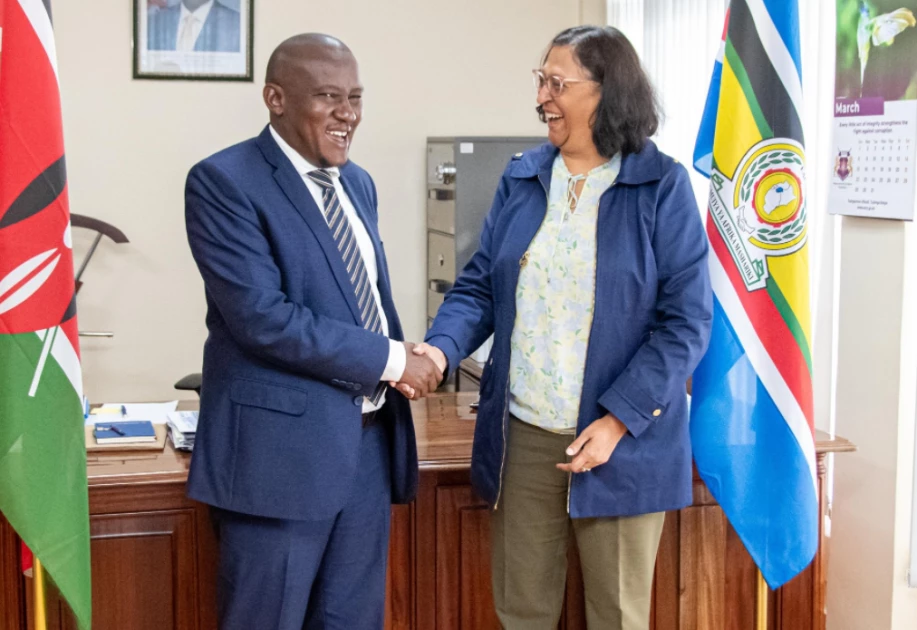
Irrigation PS Ephantus Kimotho hosts the World Bank’s new Water Practice Manager, Soma Moulik, at Maji House on Tuesday, March 3, 2026. PHOTO | COURTESY

Audio By Vocalize
Principal Secretary for Irrigation Ephantus Kimotho, on Tuesday, hosted the World Bank’s new Water Practice Manager, Soma Moulik, at Maji House, in a meeting that reaffirmed the lender’s support for Kenya’s irrigation transformation agenda.
The talks focused on the implementation of the National Irrigation Sector Investment Plan (NISIP) and its alignment with the broader agricultural growth strategy.
According to PS Kamotho, irrigation remains a strategic pillar in enhancing food security, creating rural employment, strengthening climate resilience, and driving inclusive economic development.
PS Kimotho underscored the need for investments across the entire irrigation value chain to empower both smallholder and commercial farmers under the NISIP framework.
He called for improved performance and governance of irrigation schemes, stronger corporate agribusiness models, and the adoption of efficient and sustainable water management practices to maximise productivity and returns.
They also reviewed the proposed Kenya Resilient Irrigation for Sustainable Economy (KRISE) programme, which is expected to accelerate farmer-led irrigation development, introduce results-based financing mechanisms, enhance scheme efficiency, and improve water security in Arid and Semi-Arid Lands (ASALs).
Both sides further deliberated on technical support for the preparation and structuring of priority irrigation dam projects to make them bankable and attractive to private investors. Blended financing and co-financing models were discussed as viable mechanisms for mobilising resources and de-risking large-scale irrigation investments.
In a separate engagement led by the PS, UNOPS Director for East and Southern Africa Rainer Frauenfeld led a delegation to explore areas of collaboration under the President’s 50 Mega Dams agenda.
The discussions centred on strengthening technical support for priority dam projects slated for 2026 and the broader expansion of the national irrigation sector.
The meeting highlighted the importance of structured planning, sound procurement systems, and efficient project management in delivering large-scale water and irrigation infrastructure.
UNOPS reaffirmed its role in supporting governments and development partners in infrastructure implementation, procurement oversight, and project management.
“The agency’s expertise enhances institutional capacity and supports the realisation of the Sustainable Development Goals in alignment with national development priorities,” stated the officials.
PS Kamotho, on his part, expressed the Ministry’s commitment to deepening partnerships with development agencies to actualise the ambitious target of placing 1.5 million acres under irrigation.
“Through strengthened collaboration and the implementation of the Mega Dams initiative, the government aims to boost food production, build climate resilience, and spur sustainable economic growth,” he said.
RMS Brands






Join the Discussion
Share your perspective with the Citizen Digital community.
No comments yet
This discussion is waiting for your voice. Be the first to share your thoughts!