
Which toilet? When a child's need is a tough balance between privacy and safety
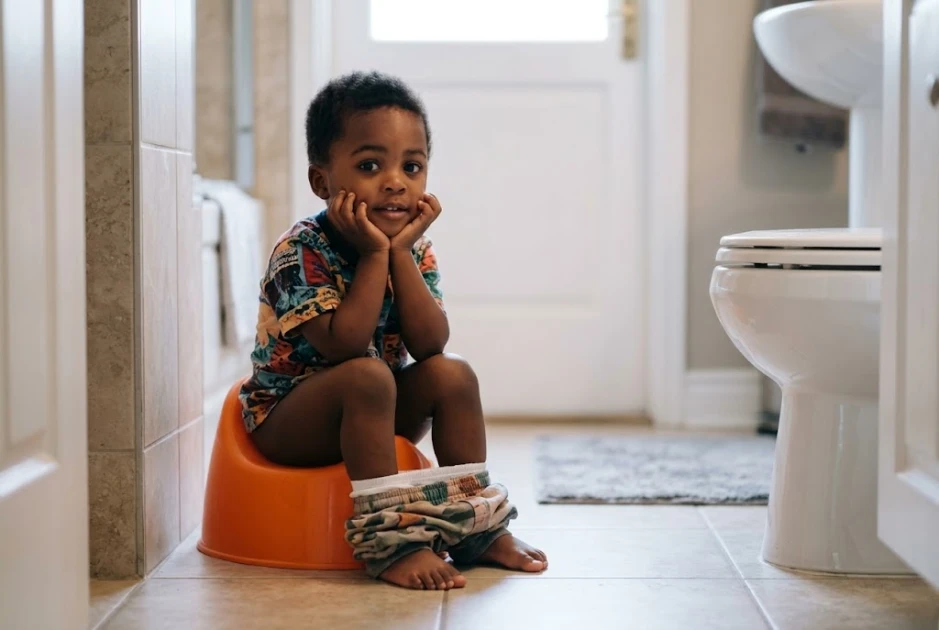
An image shows a child on a bathroom break. Photo: AI-generated

Audio By Vocalize
But for some parents, these seemingly ordinary outings come with an unexpected challenge of figuring out how or where to take their children to the toilet, particularly when they are of the opposite sex.
For mothers with young boys and fathers with young girls, a simple bathroom break can quickly become an uncomfortable balancing act between privacy, independence and safety.
Anabelle, a mum, says she sometimes finds herself waiting outside the men's washroom and asking a stranger to check on her young son.
“I have had to wait outside the men's washroom and ask a random man to check on my son. I look at someone who seems sane and trustworthy enough, but even then, you are still anxious because this is someone you do not know,” she says.
For Pauline, also a mum, the solution has been to teach her son how to use public restrooms independently from an early age. However, that has not entirely eased her worries.
“I had to teach my son to use public restrooms at a young age because sometimes you cannot go in with them. But whenever he goes in alone, I get anxious. You keep wondering whether he is okay and whether he will be safe in there,” she says.
The experiences reflect a dilemma that many parents and caregivers face in Kenya, where public washrooms are generally separated by gender, while family restrooms that allow adults to accompany children are not available everywhere.
For fathers with young daughters, the challenge can be just as uncomfortable.
Enock, a divorced father, says he usually takes his daughter into the ladies' restroom when they are out together. However, he has found that doing so sometimes attracts unwanted attention.
“People stare at me as though they are judging me, and sometimes they even question why I am going into the ladies' restroom. But I am there because I am with my daughter and she needs my help,” he says.
He says the reactions have influenced how he plans outings with his daughter, often prompting him to bring another person along.
“Because I am divorced, I usually make sure I have someone with me when I take my daughter to the mall or other public places. Sometimes I bring my current partner so that she can help my daughter when she needs to use the ladies' restroom,” he says.
While having another adult around may make such outings easier, not every parent has that option. For a single caregiver, finding someone to accompany them every time they leave the house is not always practical.
Ryan has had his fair share of anxiety when taking his children to shopping malls, although his biggest concern has been keeping track of his energetic young son.
Using humour to describe the experience, he recalls the panic of having his son get lost in a shopping mall.
“Having your child get lost in a mall is a moment of panic. You can be enjoying yourselves, then suddenly you cannot see your child, and your mind starts racing,” he says.
He adds that taking children to public spaces can be particularly challenging when they are energetic and eager to explore.
“Taking children out, especially boys who are very energetic, can be scary sometimes. They want to run around, explore things and play, and you cannot always keep them right next to you every second,” he says.
To make it easier to communicate with his son, Ryan has fitted the child's tablet with a SIM card and taught him how to operate electronic gadgets.
“I put a SIM card in my son's tablet so that we can communicate. I have also taught him how to use gadgets so that, if we are apart, he can reach me,” he says.
His other suggestion is for parents to consider bringing along an extra person, such as a housekeeper, when visiting public spaces.
“If you want to enjoy family time and allow the children to play around, it helps to have someone else with you, perhaps a housekeeper, who can help keep an eye on them,” he says.
The four parents have adopted different approaches, but their experiences point to a common concern; how to keep children safe and comfortable in public spaces that are not always designed with the needs of families in mind.
In Kenya, most public washrooms in shopping centres, restaurants, bus terminals and other establishments are separated by gender.
While some major malls have introduced family restrooms, where a parent can accompany a child regardless of gender, such facilities are not available everywhere.
This leaves parents with limited options. They can allow a young child to use the washroom independently, accompany them into a facility designated for the opposite sex, seek assistance from another person or avoid certain public outings altogether.
For some, the dilemma has even influenced how they manage their children's toilet training.
Some parents may keep children in diapers beyond the age when they would ordinarily be expected to use the toilet independently because it is easier than navigating public washrooms.
But what happens when a father needs to change a child's diaper? Yet conventionally, diaper-changing stations are only fitted in female washrooms.
Family restrooms offer one practical solution. They provide a private space where a parent or caregiver can assist a child without having to enter a gender-specific facility or leave them unattended.
They can also accommodate parents with babies, caregivers looking after several children and people accompanying children with disabilities.
However, their availability remains uneven. A parent visiting a shopping centre with designated family washrooms may have a relatively easy experience, while someone visiting a restaurant, supermarket, public park or transport terminal may have no similar option.
The challenge is not limited to bathroom visits. Parents must also contend with the possibility of children getting separated from them in crowded public spaces.
Shopping malls are particularly challenging because of the number of people moving around, the many attractions competing for children's attention and the ease with which a young child can wander away.
A child may stop to look at a toy, follow something interesting or simply lose sight of their parent.
For a young child who cannot remember a caregiver's telephone number or identify someone who can help, the experience can quickly become frightening.
These concerns come against the backdrop of reported cases of missing and abducted children in Kenya, which have heightened public anxiety about child safety.
The wider child protection challenge is also reflected in government figures. Data from the State Department for Children Services reported by Citizen Digital on May 23, 2026, showed that the Child Protection Information Management System recorded 10,581 cases involving missing and vulnerable children between January 2025 and March 2026.
The cases included 6,820 involving abandonment, 1,952 abduction cases, 1,636 missing children cases and 173 trafficking cases. The figures cover different categories of child protection cases.
For parents, the fear is not necessarily that every trip to the mall could end in an abduction.
Rather, it is the knowledge that children can be vulnerable in public spaces and may not always know what to do when separated from their caregivers.
In other countries, parents and public establishments have explored ways of using technology and simple identification systems to address some of these concerns.
One example is the use of child identification wristbands at shopping centres, amusement parks and public events. These can carry a parent's telephone number, allowing staff or another responsible adult to contact the caregiver if a child gets lost.
Other parents have turned to digital tracking devices to help monitor their children's whereabouts. In the United States, for example, some families have used Apple's AirTags and other tracking devices in children's bags or clothing.
However, the growing use of such technology has also sparked debates about children's privacy, surveillance and the extent to which parents should monitor their movements.
AirTags, for instance, were designed to locate personal belongings rather than people and should not be treated as dedicated child-tracking devices or guaranteed real-time safety solutions.
For Kenya, such technology could provide an additional layer of reassurance, but it cannot replace adult supervision, accessible facilities and proper safety procedures.
Shopping centres and other public establishments could consider introducing child identification wristbands, designated meeting points and clear procedures for responding when a child goes missing.
Equally important is expanding access to family restrooms beyond a handful of major shopping centres.
Parents should not have to depend on strangers, feel uncomfortable entering gender-specific facilities or teach children to use public washrooms independently before they are ready.
The experiences of the four parents show that the issue is not simply about where children should use the toilet. It is about how public spaces accommodate families and whether parents can meet their children's basic needs without compromising their safety or dignity.
Parents have a responsibility to supervise their children, but the responsibility for creating safe and accessible public spaces should not rest on them alone.
A father should be able to accompany his daughter to the toilet without feeling judged, just as a mother should not have to entrust her young son to an unfamiliar man because she cannot accompany him inside.
And a parent should be able to enjoy a family outing without constantly fearing that a child might disappear into a crowd.
Ultimately, making public spaces more child-friendly requires more than asking parents to be vigilant. It means recognising the everyday challenges they face and designing facilities and safety measures that respond to them.
Because sometimes, the biggest worry during a family outing is not where to shop or what to eat, but something as basic as knowing that your child can safely use the toilet and find their way back to you.
(The names used in this story were changed to protect the identities of the parents who sought anonymity)
Join the Discussion
Share your perspective with the Citizen Digital community.
No comments yet
This discussion is waiting for your voice. Be the first to share your thoughts!