
‘We’ve lost the battle,’ Ida Odinga recalls receiving news of Raila’s death from daughter Winnie

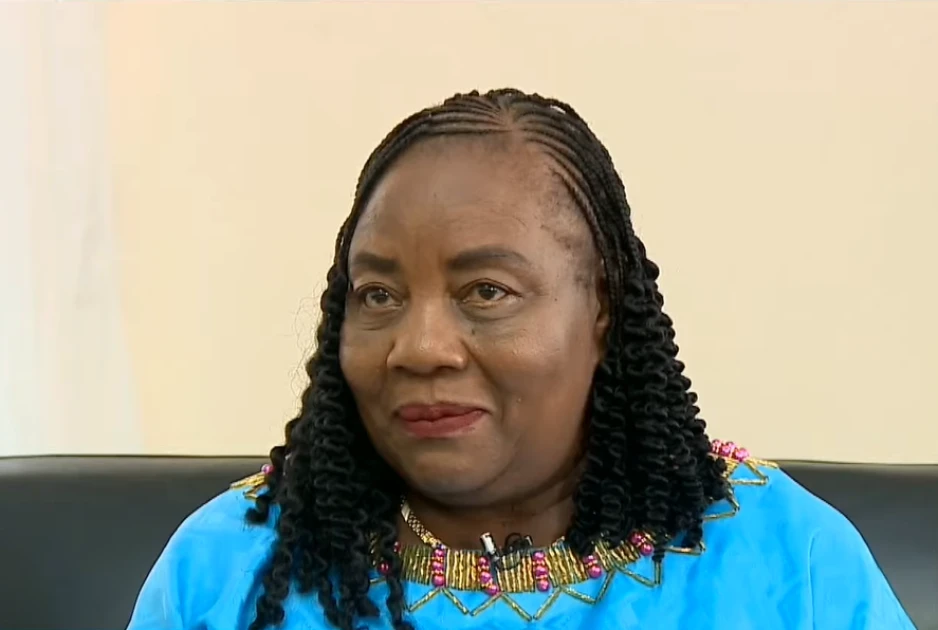
A screengrab of Ida Odinga speaking about her late husband Raila Odinga on October 14, 2026.

Audio By Vocalize
Ida Odinga has recounted the painful moment she learnt of her husband Raila Odinga’s death, revealing that their daughter Winnie was the one who broke the news to her after doctors in India tried to resuscitate the former Prime Minister.
Speaking in an interview with Citizen TV at Opoda Farm in Bondo, Siaya County, ahead of the first anniversary
of Raila’s death, Ida said she had spoken to her husband the previous day and
had no reason to believe that his condition had deteriorated.
“The day before he passed away, we talked quite a lot. We
were talking about ordinary things. There was nothing unusual, no alarm and
nothing to suggest that he was unwell. He even assured me that he was feeling
very well and that there was nothing wrong,” she said.
Ida said she received a call the following morning from
Raila’s sister, Dr Akinyi Wenwa, who asked her to reach out to another sister,
Ruth Adhiambo, who was with him in India.
“She told me, ‘Things don't seem right, but can you call
Ruth in India and find out what is going on?’” Ida recounted.
Unable to reach Ruth, Ida said she called Winnie, who was
also in India with her father.
Winnie informed her that Raila had collapsed while taking a
walk and that efforts were underway to resuscitate him.
“I asked, ‘Resuscitate?’ “She said, ‘Yes. They are taking him to the ICU, and they are trying to resuscitate him, but I'll keep you informed,’” Ida said.
About 10 minutes later, Winnie called again with the
devastating news that her beloved father was no more.
“Ten minutes later, Winnie called me and said, ‘Mum, we've lost the battle.’ “I asked, ‘What? What are you saying?’ Then she said, ‘Dad is gone.’ And that is how I received the news,” she recalled.
Ida described the moment as extremely difficult, saying the
pain of losing her husband of more than five decades has remained difficult to
process.
Although Raila was eventually brought home and buried, she
said she sometimes still struggles to accept that he is no longer physically
present.
“It has been difficult because, sometimes, I personally
don't believe he is gone,” she said.
Ida explained that the routines they shared during their
marriage continue to shape her experience of grief, particularly when she
returns home and finds his absence difficult to reconcile with the life they
once had together.
“When he was here, he would sometimes stay out late before
coming home. So, whenever I go home, I keep hoping that he is going to come
back. You wait and wait until late into the night, and then you realise that he
is not coming,” she said.
She pointed out that his belongings and the empty chair he used at
home serve as constant reminders of his absence.
“When you enter the house, his usual chair is empty. At the
dining table, his usual chair is no longer occupied. His clothes are still
around,” Ida said.
Despite the pain, she said her faith has helped her cope
with the loss, asserting that Raila's presence remains with the family in
spirit.
“But we thank God because I know that even if he is not
physically present, his spirit is alive, and his spirit is with us,” she said.
Ida's reflections on the loneliness of grief and her journey towards healing after the loss of the former Prime Minister come on the eve of the first anniversary of Raila's death, which will be marked on October 15.
Join the Discussion
Share your perspective with the Citizen Digital community.
No comments yet
This discussion is waiting for your voice. Be the first to share your thoughts!