

We divided Finance Bill 2024 into four bills and passed them - Kimani Ichung’wah
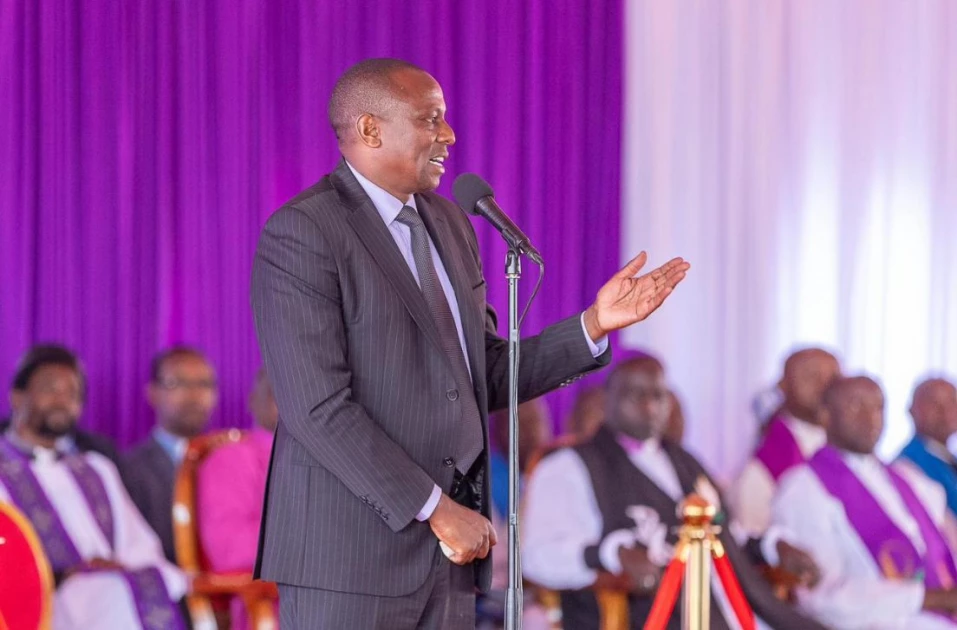
National Assembly Majority Leader Kimani Ichung'wah speaks during the burial of Mzee Weston Kirocho Kanja in Thome, Laikipia East Constituency on October 23, 2025. Photo/Ichung'wah

Audio By Vocalize
Speaking in Thome, Laikipia East Constituency on Thursday, October 23, Ichung’wah claimed that certain individuals misled the public into rejecting the bill, despite it containing several positive provisions.
This led to the 2024 anti-Finance Bill protests that forced the government to shelve the bill.
He added that President William Ruto's administration paused the bill to allow tempers to cool before re-introducing it in December 2024 through the Tax Laws (Amendment) Bill 2024 and the Business Laws (Amendment) Bill 2024.
"Yale mazuri yaliyokuwa kwa hiyo bill wakati rais hakuitia sahihi yakapotea na ndo sababu tumechelewa kwa utendakazi kwa barabara nyingi zilikuwa zimekwama," Ichung'wah stated.
"Tulipoteza bill ambayo ingeweza kutusaidia kuokota ushuru ya kutosha kuendeleza maendeleo. Baadae, wakati tulirekebisha, tukaikata kata hizo bills zikakuwa nne tukapitisha, ndo maana leo hii mheshimiwa anasema Tuesday barabara zitakuwa kwa gazeti advertised for construction."
He urged the public to verify the facts for themselves and not let misinformation cloud their judgment.
"We have a culture of misinformation and disinformation destroying the fabric of our nation," Ichung'wah added.
On December 11, 2024, President Ruto signed into law three finance-related bills: The Business Laws (Amendment) Bill, The Tax Procedures (Amendment) (No. 2) Bill, 2024, and the Tax Laws (Amendment) Bill of 2024.
The Tax Laws (Amendment) Bill sought to raise allowable pension deductions, exempt affordable housing contributions, and introduce a 15 per cent global minimum corporate tax for multinational companies.
Other key provisions included the reintroduction of withholding tax measures with clearer remittance structures and stricter penalties for non-compliance, such as a 10 per cent penalty for late remittances.
The Tax Procedures Act sought to simplify tax compliance for small businesses and small-scale farmers by introducing a reverse ticketing system to allow purchasers to issue tax invoices.
On the other hand, the Business Laws (Amendment) Bill, updated the legal framework governing the Special Economic Zones and the Employment Act.
Key provisions that were scrapped from the Finance Bill included the 1.5 per cent Digital Service Tax, eco-levy, motor vehicle tax and 16 per cent VAT on essential goods such as bread, cooking oil and eggs.
Leave a Comment