
The music industry and how Kenya's hidden gems stay trapped at home
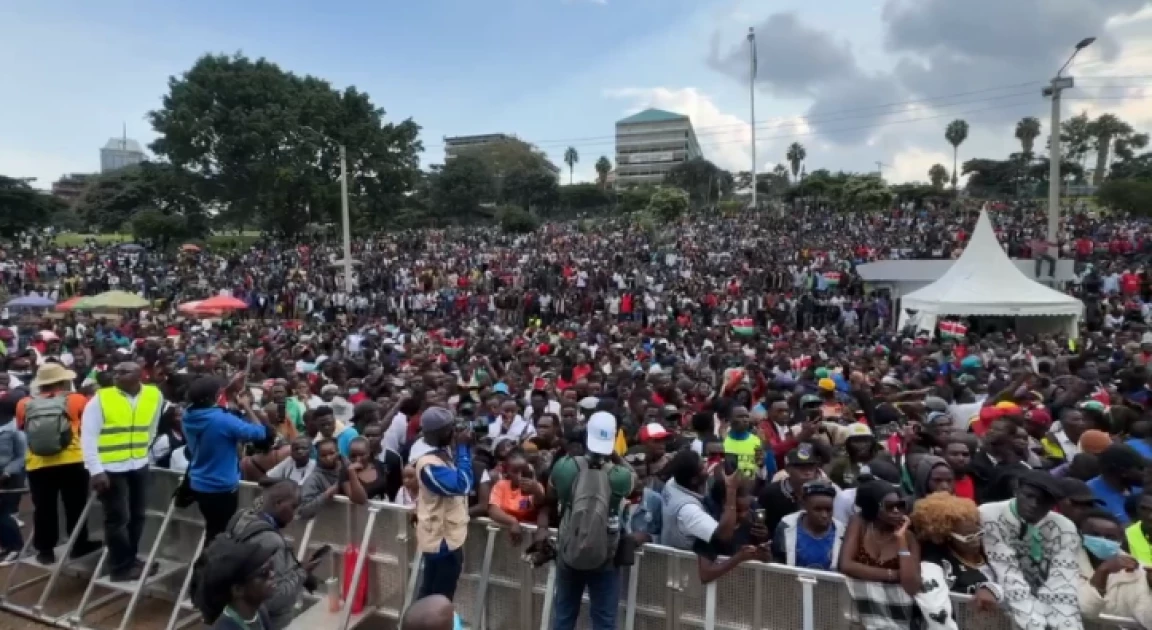
File image of Kenyan youth at a past concert held at Uhuru Park, Nairobi.

Audio By Vocalize
What is discussed far less is the deeper structural challenge facing the region’s creatives: Despite abundant talent, the industry remains fragmented, under-organized and often overshadowed by foreign acts who dominate local stages and streaming charts.
Across the region, international artists frequently headline major events, command higher fees and attract massive audiences. Meanwhile, many East African musicians and creatives struggle to scale their work beyond their home markets, even when their talent and cultural influence are undeniable. Yet the challenge is not only external competition.
Within East Africa itself, the creative scene has often been marked by rivalry rather than collaboration. Kenyans, Tanzanians, Ugandans, Rwandans and other East Africans routinely defend their national sounds with pride, sometimes dismissing those from neighbouring countries.
Social media debates over which country produces the best music have become almost ritual. But beneath the banter lies a sobering reality: While these sibling rivalries play out online, the region’s creatives collectively remain far from reaching their full global potential.
In truth, the competition has often resembled siblings fighting among themselves while the larger contest happens elsewhere.
Industry observers say this fragmentation has quietly held back East Africa’s creative economy for years. Limited collaboration across borders means artists struggle to access larger audiences. Event promoters often operate within national markets and media platforms rarely scale regionally.
As a result, many creatives remain confined to relatively small ecosystems despite the cultural connections that already exist across the region.
“Mariо is a very talented artist and a big artist in Tanzania. But if you put a show for him in Uganda today, you might get a few people but not the numbers he deserves. That simply means we have not done enough work to move that brand across the region,” said Julius Kyazze, CEO of Live54+, a creative ecosystem seeking to unify fragmented African markets and scale east african talent.
The same dynamic exists in Kenya, where audiences often recognise only a handful of major names such as Nyashinski, Bensoul, or the group Sauti Sol, despite a much wider pool of emerging talent.
“There is so much talent in Kenya that is happy to just win in Kenya. What we want to do is redraw the music boundaries of the region and make East Africa one market,” he opines.
The irony is that East Africa’s audiences are already deeply interconnected. Music travels quickly across borders through streaming platforms, radio and social media.
Fans in Nairobi listen to Tanzanian bongo hits, Ugandan Afrobeats and Rwandan pop just as easily as they do Kenyan music. The cultural appetite for regional exchange clearly exists. What has been missing is the infrastructure and mindset that allow the industry itself to move together.
“Right now, Africa has incredible talent and incredible ideas, but those ideas often stop at the border. When you connect markets and platforms, creators suddenly have the scale they need to thrive,” adds Kyazze.
He believes East Africa’s creative economy will only unlock its full potential when artists, producers, promoters and media platforms begin to see themselves not as competitors divided by nationality, but as collaborators building a shared cultural market.
“The problem has never been talent,” he said. “The problem has always been scale and structure.”
Live54+ is a creative ecosystem bringing together ventures in media, events, marketing, talent management and content production across multiple African markets. The idea is to build stronger regional networks that allow creative ideas to travel further and faster.
Instead of operating as isolated players, the different parts of the creative value chain; from artists and producers to event organizers and media platforms, would be connected through a coordinated system capable of supporting cross-border growth.
The approach reflects a growing recognition within Africa’s cultural industries that collaboration may be the missing ingredient needed to compete on a global stage.
“The creative industry could single-handedly solve a bigger portion of our youth unemployment challenge if we start treating it like a real economy,” Kyazze said. “But that requires structure, partnerships and the willingness to grow together.”
For many creatives in East Africa, the message is becoming clearer. Rivalry may drive excitement and pride, but it rarely builds industries. Collaboration, on the other hand, has the power to create markets, expand audiences and unlock opportunities that no single country could achieve alone.
If East Africa’s creative sector is to reach the global influence its talent suggests is possible, the region’s artists, entrepreneurs and fans may need to embrace a simple but powerful idea: That the rise of one does not require the fall of another.
Sometimes, the real breakthrough begins when siblings stop fighting and start building together.
Join the Discussion
Share your perspective with the Citizen Digital community.
No comments yet
This discussion is waiting for your voice. Be the first to share your thoughts!