
'Ruto must go'... then what? Edwin Sifuna outlines opposition's vision for Kenya
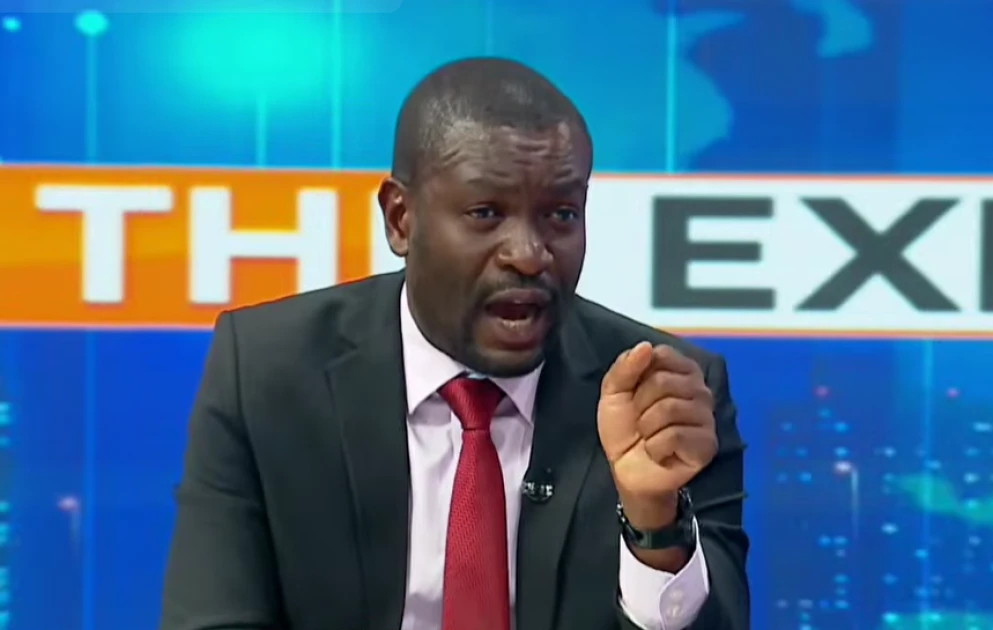
Nairobi Senator Edwin Sifuna speaks during an interview on Citizen TV's The Explainer on July 28, 2026.

Audio By Vocalize
Nairobi Senator Edwin Sifuna has defended the opposition's
push to unseat President William Ruto, arguing that Kenyans are increasingly
prioritising constitutional values such as human rights, democracy and the rule
of law over infrastructure development when judging governments.
Speaking on Citizen TV's The Explainer show on Tuesday night, Sifuna said
the opposition's call for political change is rooted in the country's
democratic history and the aspirations captured in the Constitution rather than
a rejection of development projects.
Drawing parallels with the end of the late former President
Daniel arap Moi's administration in 2002, Sifuna said Kenyans voted for change
because they were dissatisfied with the manner in which the country was
governed, despite infrastructure achievements under the KANU regime.
"We have a history as a country… there is a life we used
to live, then we decided that this life has to stop. I will take you back to
2002, which is the first time that some of us were voting; when we were kicking
out Moi, why were we saying Moi must go? Why were we saying the KANU state has
to go? It's not because Moi did not build stadiums. Moi is the one who built
Kasarani and Moi stadiums," he said.
While acknowledging that the late former Head of State oversaw
major infrastructure projects, Sifuna maintained that Kenyans rejected
authoritarian rule in favour of democratic governance.
"There is a life we used to live that was unacceptable to
us, especially as measured against the six essential values highlighted in the
preamble of the Constitution; human rights, democracy, rule of law, social
justice, equity and equality. Our lives have to be lived within a context of
democratic ideals," he said.
According to the former Orange Democratic Movement (ODM)
Secretary General, the same principles are now informing growing public
criticism of President Ruto's administration.
He argued that infrastructure alone cannot compensate for
alleged violations of constitutional rights.
"When you hear many people saying, 'You tell us how many
roads you're going to build, it doesn't matter how many people you've killed as
a government,' Kenyans are increasingly telling us that these values of human
rights and the right to life are the reasons why they're not going to be
attracted by shiny things. We know that people who believe in democracy can
also build stadiums and roads, but we don't want a dictator in power," he
said.
Sifuna acknowledged that President Ruto enjoyed widespread
public goodwill during the 2022 General Election, particularly among ordinary
Kenyans, but questioned how that support had diminished within a few years.
"William Ruto, I will accept that in the election of
2022, he rode on a very popular wave, especially with the small mwananchi. Then
you have to ask him how did he lose all of that support? What are some of the
things that he did?" He posed.
He accused the President of becoming unresponsive after
assuming office, saying his administration had failed to uphold the
constitutional principle of public participation under Article 10.
"First of all, you get in and power gets to your head and
you become very obstinate that you refuse to listen to the people. There is a
value under Article 10 which talks about public participation; we're servants
of the people, you have to listen to the people. If the people tell you that
they don't want something, you don't force it on them just because you're in
power," he stated.
The Senator revisited the 2023 anti-government demonstrations
led by the late opposition leader Raila Odinga, saying protesters initially
sought dialogue over the rising cost of living before the demonstrations
escalated.
"We started by having a conversation at Jeevanjee Gardens
and we told the government the things we felt they needed to address. First of
all, the cost of living was going way beyond the capacity of many Kenyans, and
you need to listen so that you're able to make interventions to assuage the
suffering of the population," he recalled.
He claimed that the government's response to those concerns
was force rather than engagement.
"Instead of listening to us, we were met with teargas and
bullets in the streets and we lost a lot of lives," he said.
Sifuna also criticised the government's tax policies, arguing that
they had eroded Kenyans' purchasing power while questioning the implementation
of the Affordable Housing Programme through the Housing Levy.
Using Busia County as an example, he argued that development
priorities should reflect local needs rather than a one-size-fits-all national
agenda.
"President William Ruto claims he's trying to eliminate
slums. What slums was he eliminating in Funyula? The priorities of the people
in the area mean something, and you have to listen to them. If you spoke to the
people of Busia, they would rather that concrete and steel was used in
expanding the Busia hospital, doing schools and other things, because that is
their priority," he said.
He added that the success of the housing programme should be
measured by whether informal settlements have actually been transformed.
"He should be telling us that because of this taxation,
I've closed one slum in Mathare or Mukuru Kwa Njenga and those people who were
living there are now in these high-rise buildings. Then we would listen to him,"
said the outspoken lawmaker.
Referring to the deadly anti-government protests witnessed in
2024, Sifuna said the deaths could have been prevented had the government
responded to public concerns earlier.
"All of those deaths were very avoidable. All William
Ruto needed to do was to listen to the people," he said/
The Nairobi Senator hence stated that the opposition's vision
for government is anchored in the Constitution rather than personalities or
campaign promises.
"The kind of government that Kenyans want is already in
our Constitution; one that is based on the essential values of human rights,
equality, freedom, democracy, social justice and the rule of law. These are not
abstract concepts," he said.
Join the Discussion
Share your perspective with the Citizen Digital community.
No comments yet
This discussion is waiting for your voice. Be the first to share your thoughts!