
Relief for traders as Ruto orders review of Ksh.3.2M consolidated cargo clearance charges
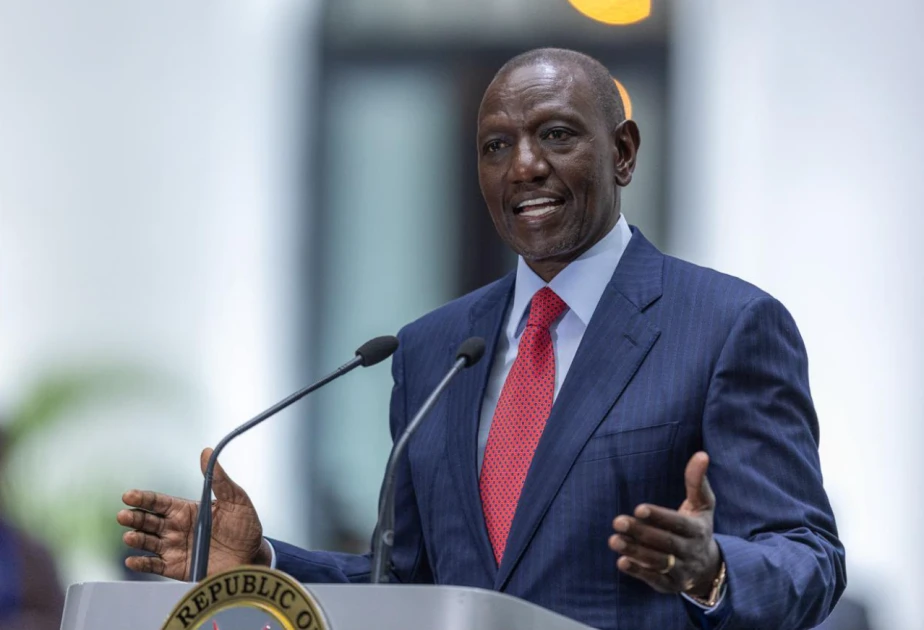
President William Ruto addresses the nation at State House, Nairobi, on July 30, 2026. PHOTO | PCS

Audio By Vocalize
President William Ruto has ordered a review of the Ksh.3.2
million customs clearance charge for consolidated cargo following protests by
small-scale traders, proposing that high-value goods be treated differently
from ordinary consignments.
Speaking during a meeting with Micro, Small and Medium
Enterprises (MSME) traders at State House, Nairobi, on Wednesday, Ruto said the
government was willing to address concerns raised over the increased customs
clearance threshold but maintained that all Kenyans must contribute taxes to
support government operations.
The Head of State directed that containers carrying ordinary
goods continue to pay Ksh.2 million, while those containing high-value goods
undergo further assessment based on the value of the items inside.
"Kama hakuna high-value items, tupunguze bei mpaka Ksh.2
million," he stated.
"Kama kuna bidhaa za bei ghali zitolewe kwanza. Container
ambayo haina high-value items tuendelee na bei ya zamani. Ones with high-value
items lazima ijulikane ni nini."
He questioned whether a uniform customs clearance threshold
should apply to containers carrying goods of significantly different values.
"Mnataka pesa irudishwe ifike either Ksh.2.5 million ama
Ksh.2 million? Nataka niwaulize nyinyi, mnajua vile pesa ya serikali
inapatikana ndio tuweze kulipa walimu, askari, all these things we're doing?"
Ruto posed.
"Tukubali kwanza lazima sisi wote tuchangie. Shida ambayo
iko hapo ndani, hawa watu wa KRA, wanasema Ksh.2.5 million. Assumption ni
bidhaa ya container ni around Ksh.6 million, hence ushuru ni Ksh.2.5 million.
Lakini kuna wakati mwingine bidhaa ni Ksh.20 million, anafaa kulipa kweli
Ksh.2.5 million? Niko tayari kufanya vile mmesema lakini pia nataka tukubaliane."
Ruto further directed the Kenya Revenue Authority (KRA) to
provide traders with a list of high-value items that would not qualify for the
consolidation arrangement.
The President also called for greater transparency in the
consolidation business, directing KRA to establish a proper register of
consolidating agents and the traders whose cargo they handle.
"Pia tunataka kujua consolidators ni akina nani. Bwana
KRA, get a proper list of consolidators and also for consolidators, know the
traders who you're consolidating for to be accountable and transparent,"
Ruto stated.
In a further concession to traders, Ruto said the government
had directed Kenya Railways to reduce charges imposed on containers undergoing
deconsolidation where high-value goods are discovered.
"We have asked Kenya Railways that for those doing
deconsolidation, if you're found with high-value items, to reduce the amount
per container from Ksh.55,000 or Ksh.58,000 to Ksh.10,000," Ruto stated.
The development comes after small-scale traders staged
protests over the Ksh.3.2 million clearance charge, vowing to continue
demonstrating until KRA reviewed the new arrangement.
The traders had maintained that import duty should be
determined by the type and value of goods being imported, arguing that a
uniform benchmark did not reflect the varying value of merchandise carried in
consolidated containers.
KRA Commissioner for Customs and Border Control Linda Nyawanda
had previously said the tax authority was willing to assess goods based on
their actual value and nature rather than strictly applying the Ksh.3.2 million
benchmark.
"We are not insisting on the Ksh.3.2 million. You can
open your container, we look at the items and assess the fair tax. It is not a
law," Nyawanda stated.
However, traders had argued that individually assessing goods
inside shared containers would cause significant delays, particularly where a
single container carries consignments belonging to dozens of importers.
Join the Discussion
Share your perspective with the Citizen Digital community.
No comments yet
This discussion is waiting for your voice. Be the first to share your thoughts!