
Patrice Lumumba: Congolese anti-colonial icon who angered Belgian king
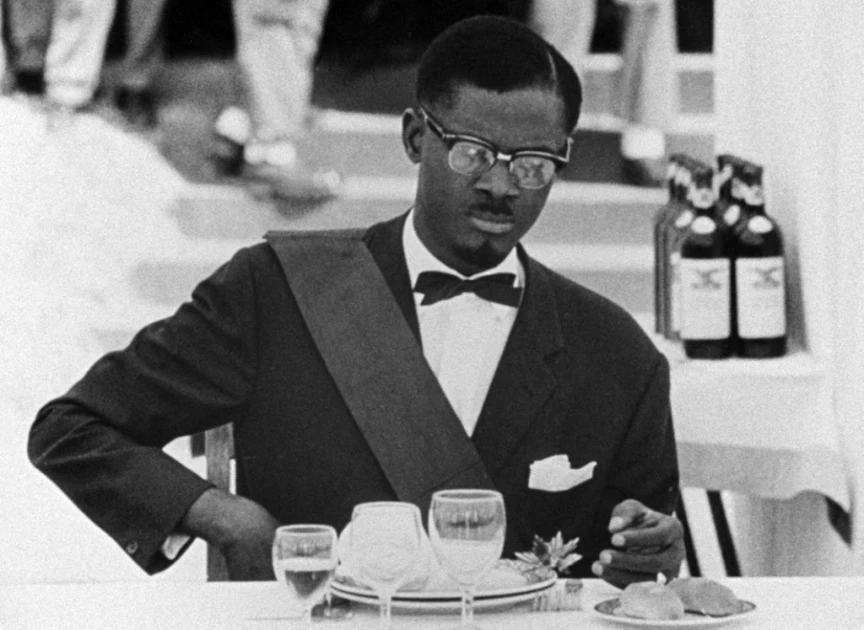
LUMUMBA, LA MORT DU PROPHETE. 1991 de Raoul Peck Patrice Lumumba.

Audio By Vocalize
A Belgian court will hold a hearing Tuesday on whether a former senior diplomat should go on trial over Lumumba's killing in 1961.
In June 1960, in the presence of Belgium's King Baudouin, the 34-year-old prime minister accused the former colonial masters of racist maltreatment and forcing "humiliating slavery" on the Congolese people, making him an instant hero of African independence movements.
"We experienced the slurs, the insults, the beatings that we had to undergo morning, noon and evening, because we were negroes," he proclaimed.
It was a withering response to King Baudouin, whose speech shortly before had saluted the work of his royal ancestor Leopold II, insisting that he was not a "conqueror" but had come on a "civilising mission".
Lumumba was born on July 2, 1925 in the village of Onalua in the central province of Sankuru to parents from the Tetela minority ethnic group.
He first studied to become a nurse, then joined the colonial administration's post office school, graduating to become a clerk at the mail service in the northeastern city of Stanleyville, which is now called Kisangani.
He was accused of embezzlement and sentenced to several months in jail in 1956.
"What did I do other than take back a little of the money the Belgians stole from Congo?" he is reported to have said at the time.
- 'A nationalist' -
"He never denied diverting funds," said Congolese academic Emmanuel Kabongo, who has written extensively about Lumumba.
After coming out of prison "thanks to his ties to liberal Belgians", he was employed as a commercial director of a brewery seeking to boost its beer sales in Leopoldville, the city now called Kinshasa, Kabongo said.
At his new job, he was earning almost ten times as much as at the post office, he added.
In 1958 he launched a political party, the Congolese National Movement (MNC), which called for independence and a secular Congolese state.
His critics branded him a communist, but Congolese academic Jean Omasombo said he was not.
"He said several times he was a nationalist, not a communist," he said.
For a month in early 1960, Lumumba took part in a roundtable on Congo's independence in Brussels, alongside other Congolese politicians and traditional leaders.
His party won national elections in May 1960, a month before independence, leading him to be named the first prime minister of the country when it became independent.
He was among the vanguard of pan-African leaders who led the charge to end colonialism in Africa in the late 1950s.
But, Kabongo noted, "he was only head of government of the new state for two months and thirteen days", from June 30 to September 12, 1960.
The charismatic young politician's independence speech earned him Belgium's resentment.
Western powers needed little else to see the 35-year-old firebrand as a threat, particularly after he sought support from the Soviet Union.
- 'Disturbed American interests' -
Aiming to quickly neutralise him, Belgium and the CIA exploited the ambitions of other Congolese leaders, documents show.
They succeeded with a young army chief-of-staff named Joseph-Desire Mobutu, who led a coup that overthrew Lumumba.
Later Mobutu seized power in another coup and imposed dictatorial rule from 1965-1997, renaming the nation Zaire and himself Mobutu Sese Seko.
After Lumumba was ousted, he was arrested and handed over for execution to the authorities in the mineral-rich southeast Katanga province, which seceded from the fledgling nation months earlier with Belgium's support.
A plane landed at the airport of Katanga's provincial capital Elisabethville -- now called Lubumbashi -- in early 1961.
He was driven out into the savannah and shot dead along with two companions after nightfall at the foot of a tree by Katangese separatists and Belgian mercenaries on January 17, 1961.
He was just 35 years old.
His body was dissolved in acid, but a Belgian police officer involved in the killing kept one of his teeth as a trophy. Belgium finally returned it to his family in 2022.
Lumumba's independence speech just months before his death had "certainly sealed his fate", said Kabongo.
"His nationalism and closeness to (other) pan-African icons... had disturbed American interests in Congo."
Leave a Comment