
Parliament moves to Supreme Court to challenge removal of clauses in Cybercrime Act
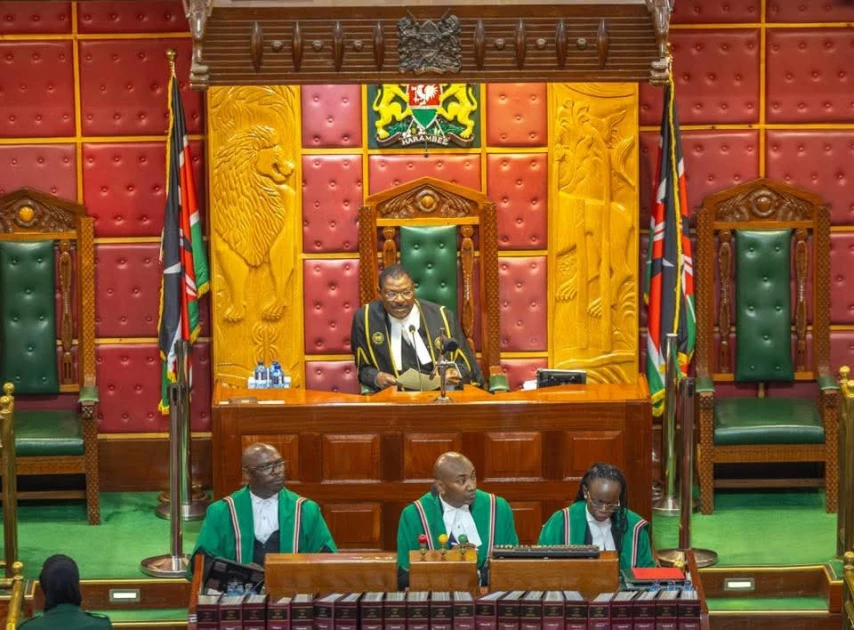
Speaker Moses Wetangula chairs a House sitting in the National Assembly on Thursday, March 5, 2026. PHOTO | NA

Audio By Vocalize
In its appeal, Parliament, through the Speaker, seeks the apex court's reinstatement of Sections 22 and 23, arguing that the Court of Appeal wrongly declared them unconstitutional despite the safeguards in the law.
At the heart of the appeal is whether the State can criminalise the deliberate spread of false information without infringing on the constitutional right to freedom of expression.
The National Assembly argues that the law does not target ordinary opinions, satire or honest mistakes, but deliberate and knowing attempts to pass false information as genuine.
“Freedom of expression protects opinion, satire, and honest error. It does not protect a calculated, malicious intent to deceive and cause mass chaos,” the State says.
Parliament further argues that the Court of Appeal relied too heavily on what could happen if the law was misapplied, rather than examining whether the provisions, properly interpreted, actually criminalise innocent conduct.
“The mere possibility that a provision may be misapplied does not establish that the provision itself is overbroad,” the National Assembly argues.
The National Assembly says the Court of Appeal should instead have interpreted the provisions narrowly to protect legitimate forms of expression while retaining the law against deliberate falsehoods.
It argues that the provisions can be confined to “intentional or knowing false factual assertions”, excluding opinions, satire, parody, honest mistakes, innocent forwarding and journalistic inaccuracies where the required criminal intention is absent.
The National Assembly is also warning that striking down the provisions altogether could leave a gap in the law and create uncertainty in ongoing criminal investigations and prosecutions.
It wants the Supreme Court to set aside the Court of Appeal judgment and either uphold the provisions or adopt an interpretation that brings them into conformity with the Constitution.
The Court of Appeal had declared Sections 22 and 23 unconstitutional after finding that their broad wording could potentially catch innocent social media users, journalists and people forwarding information.
Join the Discussion
Share your perspective with the Citizen Digital community.
No comments yet
This discussion is waiting for your voice. Be the first to share your thoughts!