
OPINION: Trade policy a catalyst for Agribusiness investment in Kenya
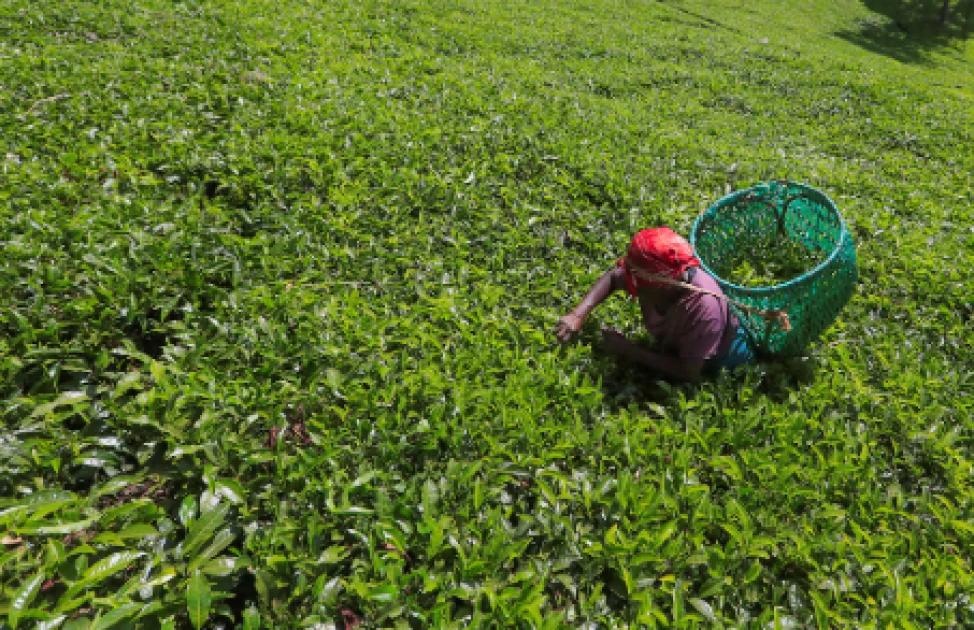
A worker picks purple tea leaves at the Gatura Greens purple tea plantation in Gatura settlement of Muranga county, Kenya January 30, 2021. REUTERS/Thomas Mukoya

Audio By Vocalize
By Regina Ombam,
Despite being central to Kenya’s economy and contributing between 22 and
30 per cent of the GDP and employing over 40 per cent of the population,
our Agriculture sector has not fully evolved into a modern value-driven
agribusiness system capable of driving large-scale industrialisation and sustained export growth.
The current structure of the sector reveals both its strengths and its
constraints. Kenya produces globally competitive crops and livestock
products and has built strong access to European, Middle Eastern and
regional African markets.
However, much of this
output is exported raw or semi-processed, limiting value capture,
export earnings and job creation.
Structural bottlenecks remain significant, with more than 90 per cent of
agriculture being rain-fed, leaving production exposed to droughts and
floods. Irrigation potential exceeds 1.3 million acres, yet only a
fraction is fully developed.
Post-harvest losses
in some value chains remain high due to limited cold storage and
warehousing. Smallholder farmers dominate production but often lack
access to mechanization, affordable finance and structured markets.
At the same time, Kenya continues to import products such as edible oils
and certain dairy derivatives that can be competitively produced and
processed locally.
This mismatch between domestic production potential
and value addition represents one of the country’s
clearest industrial opportunities.
Kenya’s population of over 50 million is growing, while regional
integration under AfCFTA and COMESA provides access to a market of more
than 1.3 billion and 400 million consumers, respectively.
Clearly, the
demand fundamentals are favourable. The rising demand
for processed foods, dairy products, meat, cereals and packaged goods
across Africa presents a strategic opportunity for Kenya to position
itself as a regional processing and distribution hub.
Capturing this opportunity will indeed require deliberate alignment
between trade policy and industrial incentives. This shift requires
infrastructure, capital and regulatory clarity, which the government has
been working to get right. As we prepare to host
the Kenya International Investment Conference (KIICO 2026), this
conversation takes on even greater urgency.
On the infrastructure front, progress has been made in terms of
investments in roads, rail, port and air facilities. Our Port facilities
have been strengthened along logistics corridors, while air cargo
capacity supports high-value exports.
With nearly 90 per cent of electricity generation coming from renewable sources, the provision of
relative energy stability for processing industries is assured. In
addition, Special Economic Zones are offering structured environments
for investors seeking serviced land and fiscal incentives.
However, climate risk remains a central constraint as recurrent
droughts and floods disrupt supply chains and undermine productivity.
Building resilience into agribusiness is therefore not optional.
Expanding irrigation, strengthening water management,
promoting drought-tolerant seed varieties and improving soil management
practices will stabilize output and reduce volatility.
Programmes such
as the Kenya Climate-Smart Agriculture Project have demonstrated that
improved technologies can raise yields and
farmer incomes.
Our next step as the government is to scale these interventions
commercially. Therefore, moving to the next level requires coordinated
action.
Specifically, irrigation expansion must accelerate, cold-chain
and storage systems must be strengthened, processing capacity
must be incentivized, and trade facilitation must be streamlined. In
all this, climate resilience must be integrated as opposed to treating
it as a stand-alone intervention.
If Kenya succeeds in shifting from raw commodity exports to integrated,
value-added and climate-resilient supply chains, it will create jobs in
processing, logistics and manufacturing, increase foreign exchange
earnings, reduce import dependence and deepen
industrial capacity. Agribusiness can build Kenya’s industrial future.
The author, Regina Ombam, is the Principal Secretary, State Department for Trade
Leave a Comment