
OPINION: Mandera's quiet revolution and the crisis it cannot ignore
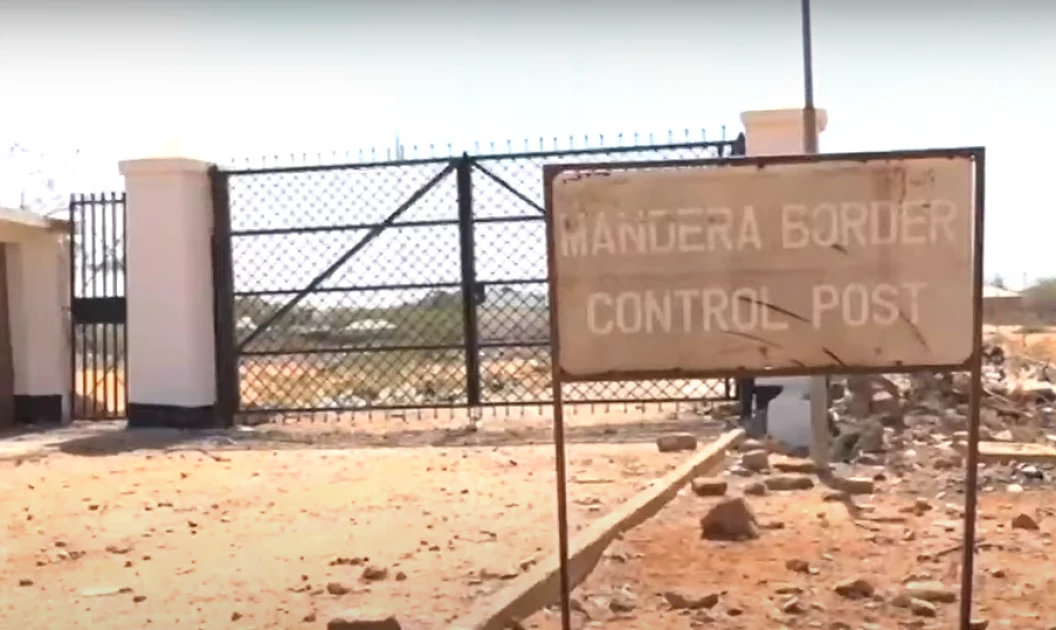
The Mandera control post at the border of Kenya and Somalia.

Audio By Vocalize
Across the country, this moment is shadowed by a familiar fear: school fees. In Mandera, that fear has been deliberately removed. Secondary education in all public schools is free.
That single fact sets Mandera apart.
To understand why it matters, one must begin not in classrooms, but in the dust.
Mandera is a livestock county. Cattle, camels, goats, and sheep are not just economic assets; they are life itself. Over the past several years, however, the rains have repeatedly failed. One dry season has bled into another.
Pasture has withered. Water points have collapsed. Animals have died in staggering numbers. Herds accumulated over generations have vanished, sometimes within a single season.
With the animals went income. With income went food security. Families were pushed to the edge. In this environment, education was once an early casualty. School fees, modest by urban standards, became insurmountable.
Parents were forced into cruel calculations: feed the family or pay fees, sell the last goat or pull a child out of school.
Those choices were rarely equal. Boys were prioritised. Girls stayed home. Many never returned to the classroom.
This was the reality Mandera carried into the August 2022 elections.
Governor Mohamed Adan Khalif campaigned on a promise that sounded bold, even improbable: free secondary education for all students in public schools. At a time when drought was erasing livelihoods and humanitarian needs were rising, the pledge drew scepticism. Free education is expensive. Sustaining it is harder.
Three years later, the policy remains intact.
Today, more than 20,000 students attend public secondary schools in Mandera without paying fees. At the beginning of term, children pack their bags and report to school without fear of being sent home. Parents no longer stand at the edge of desperation deciding which child’s future they can afford. Girls walk into classrooms with the same certainty as boys.
In a region often portrayed through the language of crisis and failure, this achievement is extraordinary. Mandera is the only county in the former North Eastern region to have implemented and sustained free secondary education at scale. In doing so, it has turned education into a form of social protection, insulating children from the economic shocks of drought and poverty.
This deserves praise.
But praise alone is not enough.
Because beyond the school gates, Mandera’s most fundamental problem remains unresolved. Water.
Drought, at its core, is not simply about rain. It is about water systems that fail when rainfall becomes unpredictable.
Livestock cannot survive without reliable water sources. Pasture cannot regenerate without water. Agriculture, however limited, cannot exist without it. Food production, nutrition, and livelihoods all collapse when water is absent.
Yet Mandera still relies heavily on emergency responses: water trucking, short-term boreholes, and seasonal interventions that break down or dry up.
These measures save lives in the moment, but they do not change the structure of vulnerability. Each failed rainy season resets the crisis.
The contradiction is stark. A county that has shown discipline, vision, and political will in protecting education has not yet applied the same urgency to water security.
The result is a fragile balance: children are in school, but their households remain trapped in a cycle of loss and recovery that never quite recovers.
This is not an argument against what Mandera has achieved. It is an argument about what must come next.
Governor Mohamed Adan Khalif’s administration has demonstrated that transformative policy is possible even in the harshest conditions.
Free secondary education was not inevitable. It was a choice. The same clarity is now needed on water. Sustainable boreholes, resilient water infrastructure, rangeland management, and long-term planning are no longer optional ambitions. They are existential necessities.
Education protects the future. Water sustains the present.
Mandera has shown the country—and the region—what leadership can look like when it prioritises dignity and opportunity. The next chapter will determine whether that future can stand on solid ground.
Because when drought takes livelihoods, protecting education is an act of courage. But without water, even courage has limits.
By Ali Bashir Adow
Lawyer and Policy Analyst
Leave a Comment