
OPINION: China’s diplomacy and the quest for regional peace
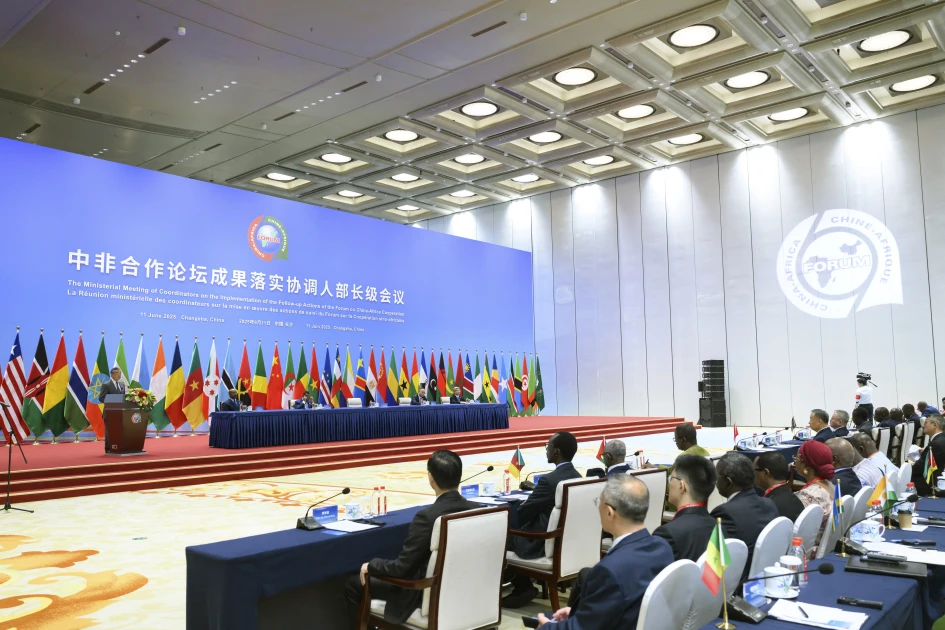
The Ministerial Meeting of Coordinators on the Implementation of the Follow-up Actions of the Forum on China-Africa Cooperation (FOCAC) is held in Changsha, central China's Hunan Province, June 11, 2025. Photo by JIN LIANGKUAI / XINHUA / XINHUA VIA AFP

Audio By Vocalize
Peace in regions affected by prolonged conflict requires more than declarations of concern. It demands sustained diplomacy, patience and a willingness to bring different parties together, despite political differences.
Against this backdrop, China's decision to send special envoys across the Gulf, Red Sea and Horn of Africa deserves attention for its emphasis on dialogue and regional stability.
China's Foreign Ministry says three senior representatives will visit seven countries in November. Zhai Jun, special envoy on the Middle East issue, is scheduled to visit Iran, Oman and Saudi Arabia.
Liu Xianfa, special representative for African affairs, will travel to Ethiopia, Djibouti and Egypt, while Hu Changchun, special envoy for Horn of Africa affairs, will visit Eritrea. The stated aim is to promote peace talks, ease tensions and contribute to regional stability.
The geographical spread matters. The Gulf, Red Sea and Horn of Africa are connected. Their security and economic fortunes are closely linked.
Events in one can affect the others through trade, energy supplies, migration and maritime transport.
Disruption to shipping can raise costs far beyond the immediate area, while conflict can deepen humanitarian pressures and unsettle neighbouring states.
The Bab el-Mandeb Strait links the Red Sea to the Gulf of Aden and the Indian Ocean. Djibouti sits near this maritime corridor, while Egypt's Suez Canal connects Asian and European markets.
These routes matter to African exporters, importers and consumers, including East Africans whose goods depend on predictable shipping and affordable transport.
That is why coordinated diplomacy across these connected spaces carries importance for governments, businesses and ordinary people throughout the region.
Kenya has a direct interest in efforts to encourage calm across this neighbourhood.
Mombasa port, the country's logistics networks and its ambition to serve as a regional trade hub depend on stable maritime commerce.
Higher shipping costs or prolonged insecurity can affect fuel, food and manufactured-goods prices. They can also complicate access to overseas markets for Kenyan and regional producers.
Peace-building requires engagement with a range of actors. The countries on the itinerary have different histories, interests and relationships; no single conversation can resolve every dispute.
Shuttle diplomacy allows envoys to listen, understand positions, identify common ground and communicate proposals. It can keep channels open when public exchanges become difficult and tensions threaten to narrow the space for negotiation.
Diplomacy rarely produces immediate breakthroughs where conflicts involve mistrust, competing security concerns and longstanding grievances.
Its value often lies in preventing misunderstandings from escalating, maintaining communication and creating conditions for practical steps towards de-escalation.
Progress may be incremental, but allowing dialogue to disappear can carry far greater costs.
China's initiative is framed by its Foreign Ministry around talks and the constructive participation of relevant parties.
This reflects a principle that regional problems require political solutions shaped by those with a direct stake in their outcomes.
External partners can encourage communication and compromise, but durable arrangements are more likely when regional countries own the process and their legitimate concerns are taken seriously.
For Africa, the visits to Ethiopia, Djibouti, Egypt and Eritrea merit particular attention. The Horn has considerable economic potential, from its ports and transport corridors to its young population and expanding markets.
Yet insecurity and unresolved disputes can obstruct investment, integration and development. Dialogue among neighbouring countries is therefore not merely a diplomatic objective; it helps create conditions in which infrastructure, trade and cross-border cooperation can deliver lasting benefits.
The African Union and regional organisations remain central. Their understanding of local contexts and established mechanisms are important assets.
International partners can complement these efforts by supporting African-led initiatives, encouraging communication and aligning their engagement with priorities identified by the countries concerned. Cooperation is most useful when it reinforces regional processes rather than displacing them.
The wider lesson is that security and development cannot be separated. Communities need stability to trade, invest, educate their children and plan for the future.
Governments need predictable regional relationships to pursue infrastructure projects and economic partnerships.
The international community, meanwhile, needs reliable channels through which disputes can be addressed before they threaten wider peace.
China's planned shuttle diplomacy is one contribution to this broader effort. Its significance will be measured not by the number of visits or statements, but by whether engagement helps sustain dialogue, reduce tensions and encourage practical cooperation.
For Kenya and its neighbours, a more peaceful Gulf, Red Sea and Horn of Africa would support safer trade routes, stronger economic links and a more secure environment for development. In a world where instability crosses borders quickly, diplomacy is a shared regional necessity.
The writer, Onyango Ayuo, is a Policy Analyst
Join the Discussion
Share your perspective with the Citizen Digital community.
No comments yet
This discussion is waiting for your voice. Be the first to share your thoughts!