
NWHSA urges long-term water management to address severe floods
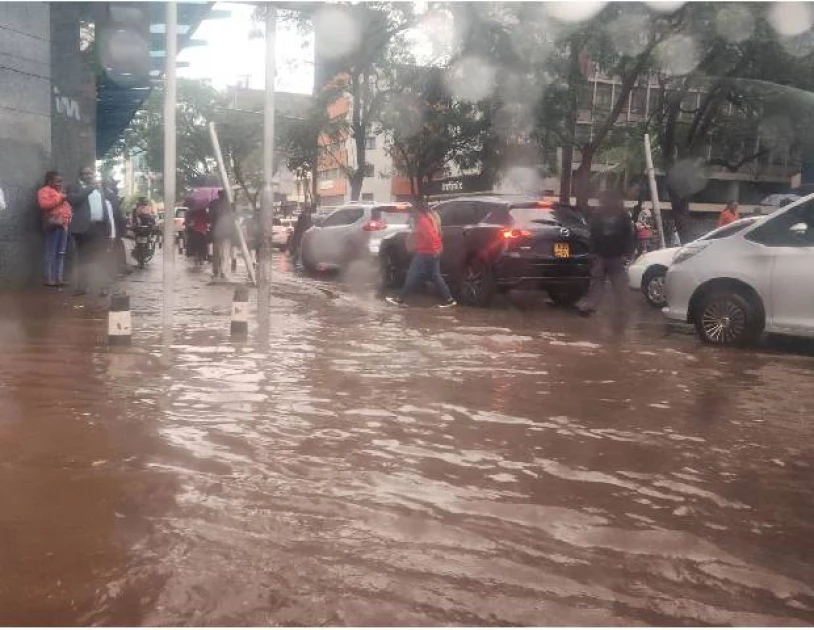
Nairobi's Central Business District (CBD) streets flooded following rains on Wednesday, March 4, 2026. [Photo/Courtesy]

Audio By Vocalize
National Water Harvesting and Storage Authority (NWHSA) CEO Julius Mugun has called for a long-term shift in how Nairobi manages stormwater following severe flooding that has paralysed major roads and left several residential estates submerged.
Mugun
expressed concern over the impact of the floods on residents and motorists,
some of whom were forced to spend the night on waterlogged roads across the
capital.
The flooding disrupted movement along key transport
corridors, including Mombasa Road, Kenyatta Avenue in the CBD, Thika Road, Dunga
Road and Enterprise Road, while homes in estates such as South C, Embakasi and
several informal settlements were also submerged
According to the NWHSA boss, the situation highlights the
city’s vulnerability to increasingly intense rainfall and exposes the
limitations of the current drainage infrastructure.
“The volume of stormwater we are witnessing is overwhelming
our current urban infrastructure, much of which was not designed to handle
these increasing flows,” Mugun said.
“When drainage is clogged or overwhelmed, it's not a
localised issue for South C or the informal settlements; it affects the entire
economic ecosystem, leading to the massive disruptions we saw yesterday on
major roads.”
He noted that the volume of water generated during heavy
downpours now exceeds the capacity of many drainage systems, some of which have
surpassed their design life.
Mugun said the recurring flash floods demonstrate the urgent
need for a dual strategy that combines improved drainage with aggressive water
harvesting initiatives.
“We must fundamentally change our perception of stormwater from a nuisance to a valuable asset. Every cubic meter of water we harvest is a cubic meter that doesn't flow down to flood a home or submerge a major highway. It is a critical link between flood control and water security that we can no longer ignore in our urban planning," he said.
The NWHSA CEO said the authority is working with urban
planners and county governments to develop sustainable water management systems
aimed at controlling runoff while boosting water storage.
“Our strategy includes not just large dams, but small-scale
water pans and mandatory household harvesting, which can collectively reduce
the peak flow into our urban drainage systems,” he explained.
Mugun added that upstream storage reservoirs and distributed
water harvesting systems within residential areas could help reduce pressure on
urban drainage networks during heavy rains.
As the Kenya Meteorological Department warns of continued
rainfall, the NWHSA boss urged authorities to prioritise long-term
infrastructure investments to strengthen the city’s resilience.
“We cannot afford to keep addressing these disasters with
temporary fixes. To truly protect our capital city, we need a concerted,
long-term investment in our water harvesting and storage infrastructure that
builds resilience against these inevitable climate shocks,” he said.
The authority maintains that expanding water harvesting and
storage infrastructure remains key to improving water security while reducing
the devastating impact of floods in urban areas.
RMS Brands






Join the Discussion
Share your perspective with the Citizen Digital community.
No comments yet
This discussion is waiting for your voice. Be the first to share your thoughts!