
Mobility and connectivity gaps hampering Africa’s intra-continental trade – Report
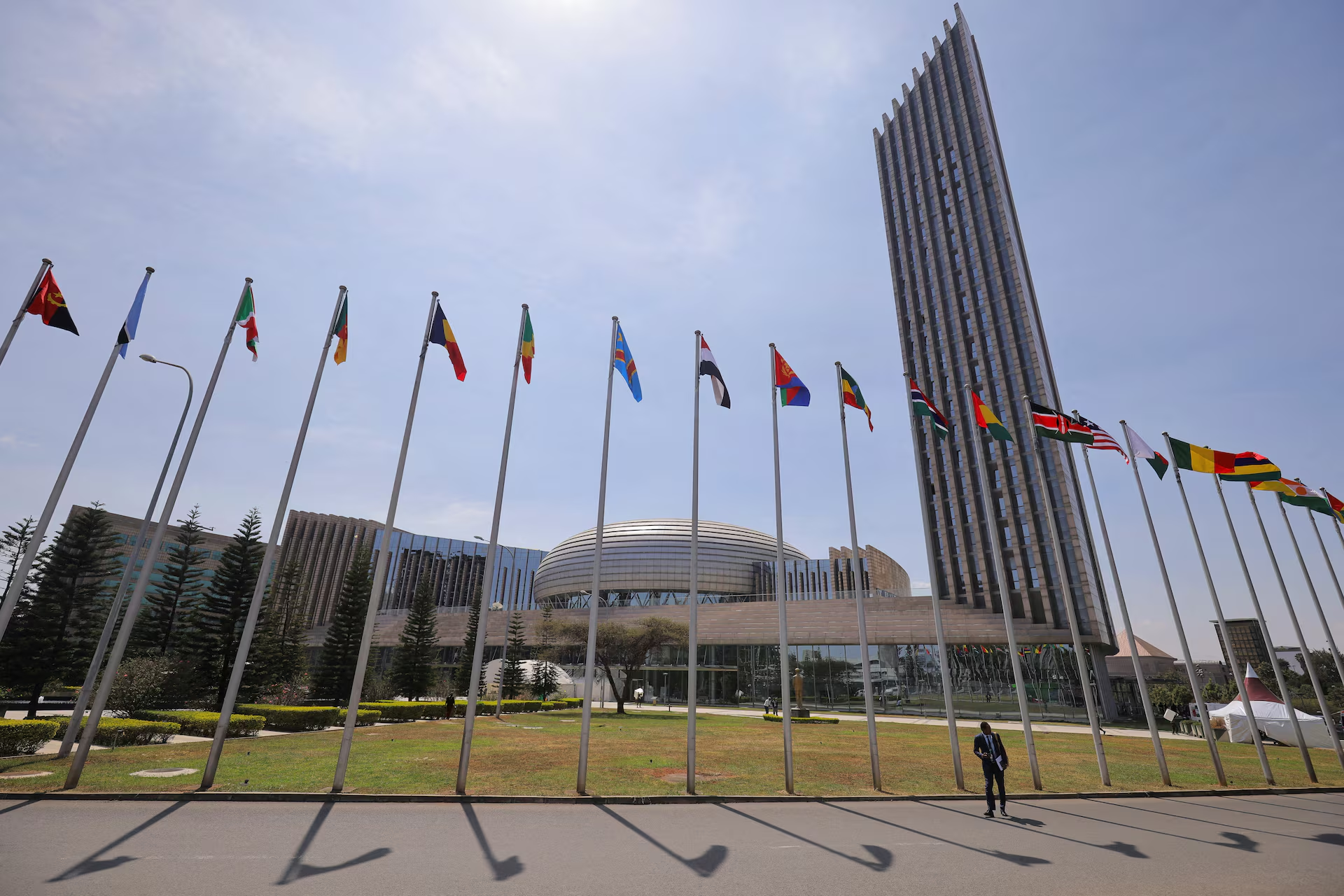
A delegate walks next to African Union (AU) member states flags ahead of the 38th Ordinary Session of the Heads of State and Government of the African Union at the African Union Commission (AUC) headquarters in Addis Ababa, Ethiopia, February 14, 2025. REUTERS/ Tiksa Negeri/File Photo

Audio By Vocalize
A report by the Mo Ibrahim Foundation has shown that Africans continue to face hurdles in mobility and connectivity, hence slowing the implementation of the African Continental Free Trade Area (AfCFTA) agreement.
Released in May 2026, the report found there is limited ability for Africans to move around the continent, despite initiatives such as the African Union’s Free Movement of Persons Protocol. While Mali, Niger, Rwanda, and São Tomé and Príncipe have ratified the Protocol, other countries remain closed due to concerns on security, reciprocity and lack of political commitments.
“Only 28% of African citizens do not need a visa to travel to their fellow African countries,” the report, titled Africa on the move: Boosting mobility and connectivity indicates.
As movement of citizens is restricted by visas, the mobility of goods and services is hampered by custom fees, among other non-tariff barriers including labelling and packaging standards and currency convertibility – which has seen the continent lose about $5 billion a year to conversion costs.
The report by Mo Ibrahim Foundation also highlights the outdated transport systems as a barrier to free trade, as traveling within the continent remains slower, more expensive and less direct.
With roads as its main mode of transport, the Foundation found that it remains discontinuous and dangerous, even as the continent grapples with limited interoperability in railway system.
The report, released during the Africa Forward Summit in Nairobi, established that overcoming the mobility and connectivity hurdles would require joint commitment from both Africa’s political and economic stakeholders.
"Africa will not harness its potential while mobility is restricted and connectivity remains outdated. We talk endlessly about African integration and then make it harder for an African citizen to cross a border within their own continent than to leave it altogether. That must change,” said Mo Ibrahim, the Founder and Chair of the Foundation.
Ibrahim further urged the continent to accelerate region integration to benefit from its assets and natural resources.
Signed and adopted in March 2018, the AfCFTA seeks to establish Africa as the world's largest free trade area by landmass and participating nations. Through removing major trade barriers, the AFCTA accord aims to create a single continental market of Africa’s 1.4 billion people.
Join the Discussion
Share your perspective with the Citizen Digital community.
No comments yet
This discussion is waiting for your voice. Be the first to share your thoughts!