
KPC eyes Kipevu trading hub to boost revenue to Ksh.68 billion by 2030

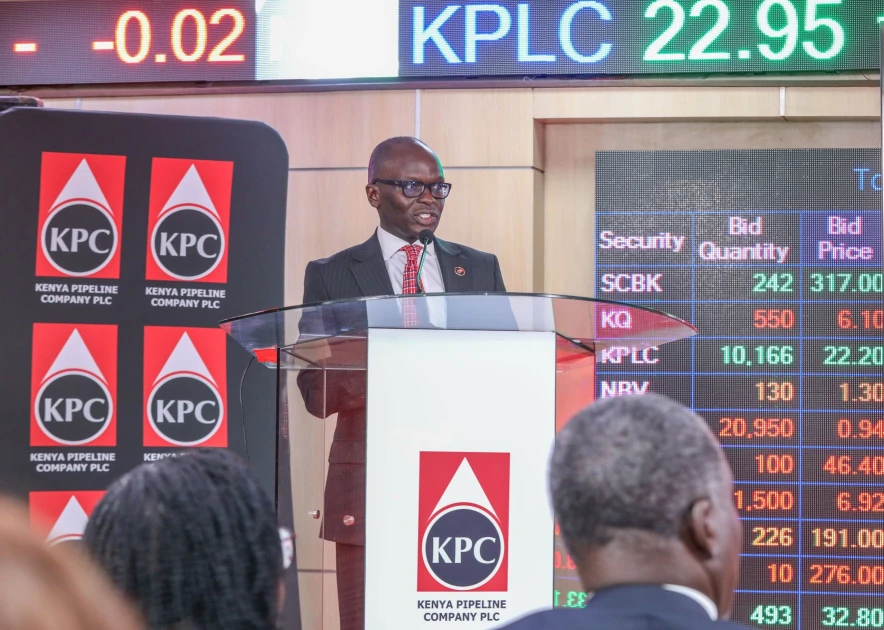
KPC Ag. Managing Director Pius Mwendwa speaks on Wednesday, October 14, 2026. PHOTO | KPC

Audio By Vocalize
Kenya Pipeline Company (KPC) closed the financial year with a net profit of Ksh.11.58 billion, up from Ksh.10.24 billion a year earlier.
The increase follows a year in which the company transported
10.6 billion litres of petroleum products, with volumes destined for Kenya and
neighbouring markets growing by 7 per cent.
That additional business helped lift revenue by 9 per cent
to Ksh.43 billion. Profit before tax rose 8 per cent to Ksh.17.54 billion.
“From a cost perspective, we have tried to drive a
cost-conscious culture of spending where it matters, but of course, the direct
costs increased slightly by 8 per cent due to some of the variable costs of
maintenance and electricity due to the higher volumes that we are pushing across
the pipeline,” KPC Ag. Finance General Manager Antony Ndegwa stated.
The stronger earnings were accompanied by increased cash
generation and lower debt. Borrowings fell 83 per cent to about Ksh.443
million, while cash generated from operations reached Ksh.17.39 billion.
Shareholders are in line for a dividend of 32 cents per
share, amounting to a total payout of Ksh.5.9 billion.
“I would say KPC is very resilient. If you look at the year
that has passed, this profit was delivered in a year that we experienced quite
high oil prices, informed by the international prices,” KPC Ag. Managing
Director Pius Mwendwa said.
While transporting fuel remains the company’s biggest source
of income, KPC is looking to build a larger business around the cargo passing
through Mombasa. Its proposed Kipevu trading hub would use the facilities of
Kenya Petroleum Refineries Limited, the former refinery now wholly owned by
KPC.
The plan is to provide a base where petroleum traders can
store fuel, supply ships and organise shipments for other markets. These services
would give KPC additional income from handling and storing petroleum products.
“We intend to develop a trading hub with world-class
transhipment, bulk breaking, bunkering and re-export services for the regional
markets,” KPC Chair Faith Bett-Boinett noted.
The company sees the planned Dangote refinery in Lamu and
Gulf Energy’s South Lokichar oil project as opportunities to grow the petroleum
trading hub business.
It is also pursuing plans to extend its pipeline from
Eldoret to Kampala, and later Kigali, improving its access to regional
customers.
For years, the Kenya Pipeline has moved fuel from the coast
to markets across East Africa. Now, the company is setting out to make Mombasa
a bigger, more lucrative centre, with the Kipevu trading hub at the heart of
its plans to generate up to Ksh.68 billion in annual revenue by 2030.
Join the Discussion
Share your perspective with the Citizen Digital community.
No comments yet
This discussion is waiting for your voice. Be the first to share your thoughts!