
Homa Bay leads as Nyanza ID registration drive hits 110,175
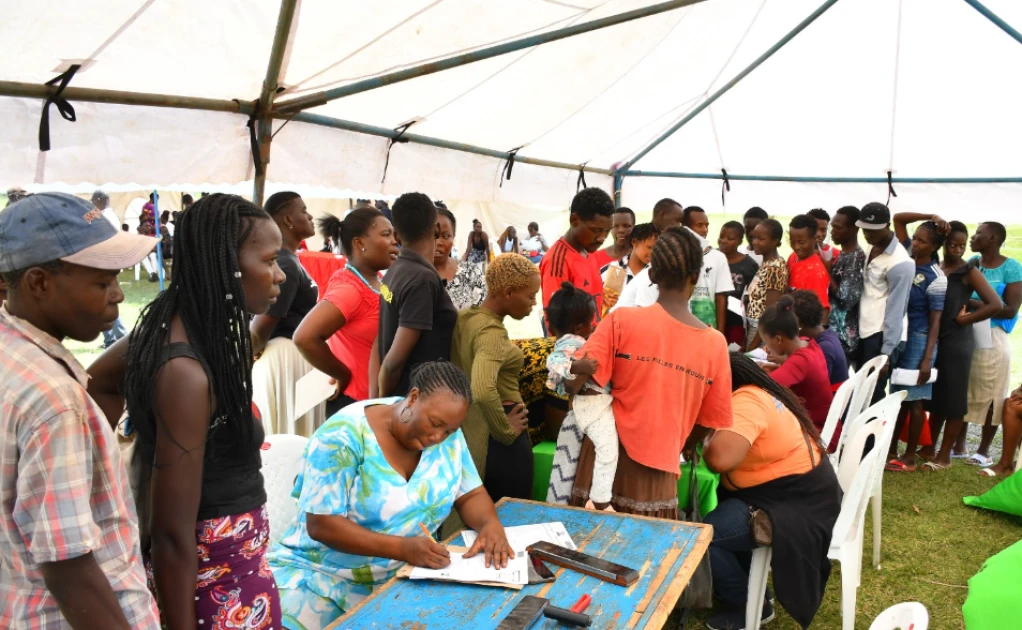
The exercise was conducted by young Kenyans spanning across the region with one goal: getting the ID forms to everyone who needed it.

Audio By Vocalize
More
than 110,000 Kenyans in the Nyanza region have been registered for national
identity cards in the first quarter of 2026, in a drive coordinated by the
office of Regional Registrar George Opiyo Matewa, through the mobilisation
efforts of the Kenya Youth Transition Initiative (KYTI).
Beyond
the numbers, the initiative stands as a powerful symbol of accessibility, civic
engagement, and empowerment, giving every citizen a voice in governance and a
recognised place in the national fabric.
According
to figures released by KYTI, Homa Bay led the four-county registration tally
with 35,463 IDs processed between January and the end of March, followed by
Kisumu at 31,408 and Siaya at 23,530. Migori recorded 19,774 registrations,
bringing the regional total to 110,175.
The
exercise was conducted by young Kenyans spanning across the region with one
goal: getting the ID forms to everyone who needed it. The villages, markets,
churches, and schools were the primary targets.
Coordinated
through Matewa's office, KYTI served as the primary mobilisation partner on the
ground, connecting government registration infrastructure with communities that
have long struggled to access documentation services.
For
many of those who walked away with their national IDs, the document represented
far more than a card; it was the moment they stepped fully into citizenship.
KYTI
Chairman Salmon Oyieko said the organisation has been at the centre of
mobilising first-time applicants, working hand in hand with local
administration to bring the exercise closer to the people.
"Working
closely with Chiefs, Assistant Chiefs, National Government Administrative
Officers, and grassroots youth leaders, KYTI has been sensitising young people
on the importance of obtaining national identification documents as a gateway
to full participation in civic, economic, and social life," he said.
Oyieko
also pointed to the deep-rooted structural challenges that have long kept
people in the region without documentation.
"This
drive is particularly significant for the Nyanza region because it addresses
longstanding documentation gaps caused by poverty, distance to registration
centres, limited awareness, and incomplete parental records," he
explained.
In
counties such as Kisumu, Homa Bay, Migori, and Siaya, many young people turning
18 had previously delayed registration, effectively locking them out of
education, employment, financial services, and government programmes.
Running
under the coordination of the Regional Registrar's office, the initiative
deployed mobile outreach services to hard-to-reach areas and made tackling
misinformation a core pillar of its civic education work.
Crucially,
the drive extended its reach beyond the youth, ensuring that elderly persons
and people living with disabilities in remote areas were equally prioritised
and not left behind.
In
doing so, it has redefined what civic engagement can look like when government
institutions and grassroots organisations work in genuine partnership.
At the
national level, Principal Secretary for Internal Security and National
Administration Dr. Raymond Omollo framed the exercise as a matter of
fundamental rights.
"The
national ID registration drive in Nyanza is fundamentally about inclusion,
dignity, and equal opportunity for every eligible Kenyan," he said.
"A
national ID is not just a document, it is a gateway to education, employment,
financial services, social protection programmes, and full participation in our
democracy."
Dr.
Omollo added that the government has deliberately moved to dismantle the
barriers that have historically kept marginalised communities undocumented.
"Through
our National Government Administrative Officers working closely with community
leaders and youth networks, we have intensified outreach to remote villages,
border communities, and previously underserved populations to ensure no one is
left behind," he said, noting that the exercise was also designed to
strengthen national cohesion and empower citizens to participate fully in
Kenya's development agenda.
That
vision of empowerment may well prove to be the most enduring legacy of the
Nyanza drive. By dismantling the bureaucratic and logistical obstacles that
have historically denied residents access to identification, the initiative has
ensured that thousands who once existed on the margins of the system can now
engage with it fully, as voters, as beneficiaries of government programmes, and
as active participants in shaping the country's future.
KYTI
says the target remains to capture all eligible persons without identification
documents within the stipulated timeline, with renewed focus on improving
coverage in wards that have historically recorded low registration numbers.
The Regional
Registrar's office is expected to continue leveraging KYTI's grassroots
networks to sustain the momentum well beyond the first quarter.
The
drive comes at a particularly timely moment, coinciding with the Independent
Electoral and Boundaries Commission's (IEBC) enhanced continuous voter
registration exercise, which is ongoing across the country until April 28th,
making the push to document every eligible Kenyan more urgent and consequential
than ever.
Join the Discussion
Share your perspective with the Citizen Digital community.
No comments yet
This discussion is waiting for your voice. Be the first to share your thoughts!