
Gov't to spend Ksh.3B on advisors in planned sale of 15% Safaricom stake
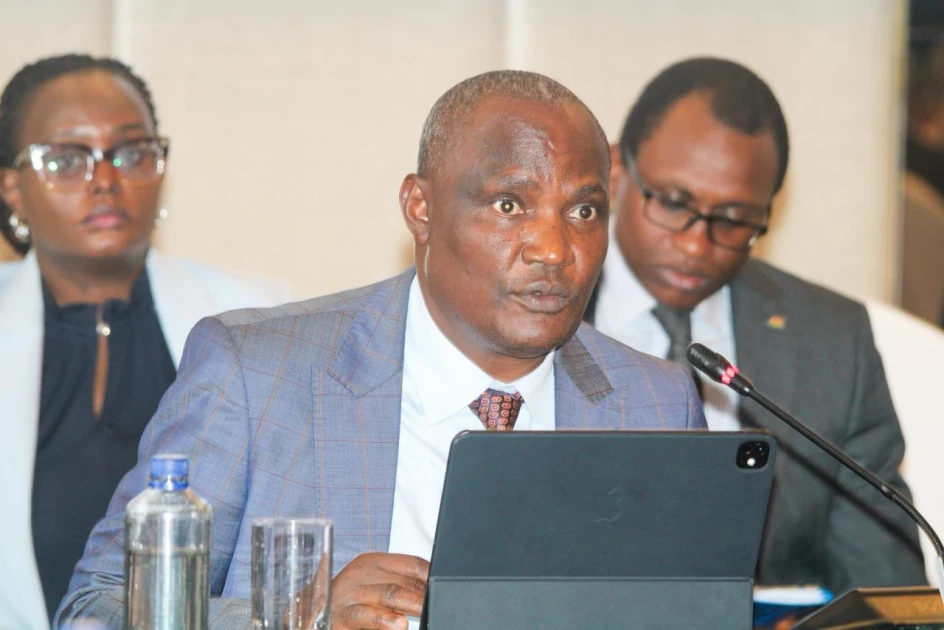
Treasury CS John Mbadi appears before a Joint Sitting of the Departmental Committee on Finance and National Planning and the Select Committee on Public Debt and Privatization. PHOTO | COURTESY

Audio By Vocalize
The government is set to spend over Ksh.3 billion on transaction
advisors and lawyers in the sale of its stake in Safaricom, a deal that will
see the State offload at least 15 per cent of its shares.
Appearing before a joint sitting of Parliamentary committees on Finance,
National Planning, Public Debt and Privatisation, Treasury Cabinet Secretary
John Mbadi defended the move to allow Vodafone to be the sole buyer of the more
than six billion shares held by the government.
Mbadi sought to clarify with members of the two committees, who put him
to task on why the government could not take a competitive bidding route.
“It looks like you have already made up your mind to sell to Vodafone
for the reasons you have told us, but don’t you think it is unfair to others
who would have wanted an opportunity to also have these shares?” Chesumei MP
Paul Biego said.
Kitui Rural MP David Mboni on his part posed; “The sale of this 15 per
cent will change the whole ownership structure. Vodafone will have 55 per cent,
and the protection is only for three years, so what happens after three years?”
“The more reason why we went for this established partner who is in this
space is to safeguard against business disruption. If we went for someone else,
there would be a possibility of such disruption,” Mbadi responded.
The CS further cited the sheer size of the transaction as another reason
why Vodafone was an appropriate choice for the government.
“This is a journey that once we conclude, we expect a fat cheque from
Vodafone of Ksh.244.2 billion — one fat cheque that will come to our
consolidated fund, where we will seek the approval of this House to appropriate
it,” stated Mbadi.
Committee members further raised concerns over public participation,
protection of minority shareholders, data security once the transaction is
complete, staff welfare, foreign exchange risks, and whether the funds would be
ring-fenced for infrastructure.
Legislators also questioned why the government must offload 15 per cent,
which will give Vodafone a controlling stake, and why it could not reduce the
percentage to avoid ceding control.
“It is now very clear that the funds will go to the consolidated fund.
Can you tell this committee how you will secure the funds so that they go to
the intended purpose?” Baringo North MP Joseph Makilap said.
His Nyaribari Masaba counterpart Daniel Manduku posed, “Are you assuring
this House that you will fast-track the enactment of the NIF or, in its
absence, ensure that these funds will be ring-fenced?
Kesses MP Julius Rutto added, “What is the certainty that after
finishing with Safaricom in two years or one year to come, we will not come
back seeking additional space to borrow?”
In his response, Mbadi said, “This money is not for budgetary support;
it is not to fill our fiscal deficit. It is going to be used exclusively to set
up the seed capital for the NIF.”
Leave a Comment