
From rallies to results: MrBeast’s fast wins embarrass Kenya’s slow service delivery
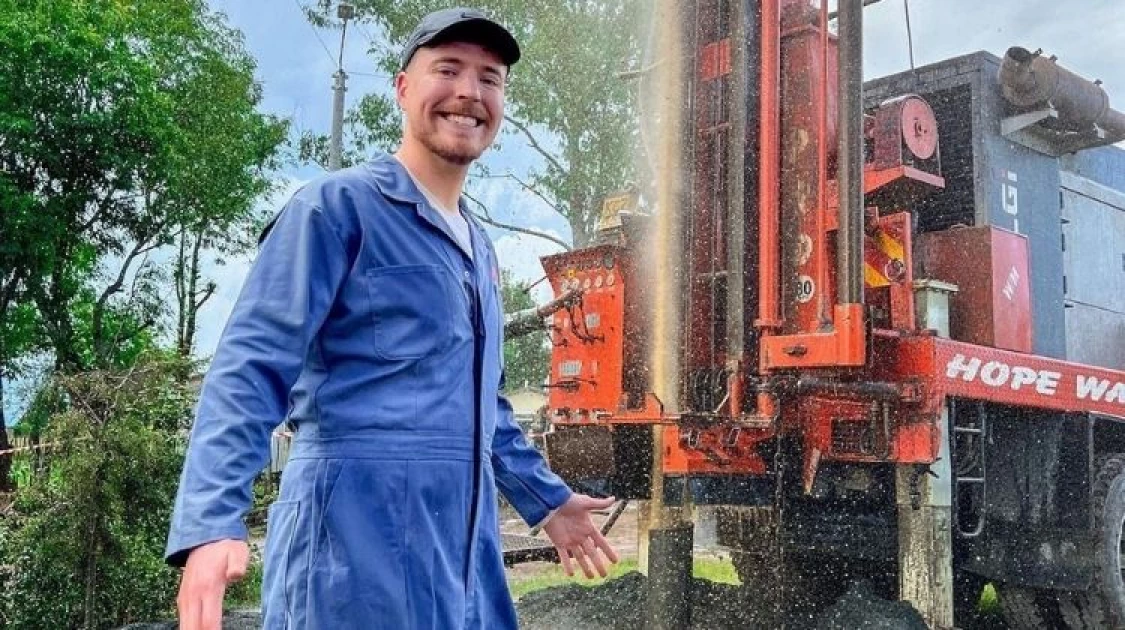
File image of American Youtuber Jimmy Donaldson, famously known as Mr Beast. PHOTO: @mrbeast/Instagram.

Audio By Vocalize
In a YouTube video, the 27-year-old explained that his team started a school feeding programme in 2025, providing every pupil with a free lunch on school days.
The programme is set to continue for the next five years.
“This school lunch feeding programme started a year ago. Here we are a year later, and the programme is still in effect. Every school day, the students get a free lunch,” Mr Beast said.
He added that the initiative has helped improve school attendance by at least 10 per cent.
During the feeding programme, he noticed the poor condition of the classrooms and decided to help. “When I saw the state of the classrooms during that video, I knew we had to do something. So we hooked them up with a brand new school,” he said.
This Kenyan project is one of ten schools in Africa that Mr Beast has supported, and in Ghana, he was conferred with the title of Chief of Development after building a classroom for 250 students.
A month before that, the generous creator had funded surgeries for 1,000 Kenyans unable to afford critical medical care, transforming lives through his Beast Philanthropy initiative.
The project set up three surgical camps in counties including Narok, Kisumu, Homa Bay, and Nairobi, targeting treatable conditions like cataracts, hernias, and thyroid disorders.
MrBeast's team arranged ambulances to transport patients from remote areas, sometimes hundreds of miles away, and supplied hospitals with equipment and medicines.
The entire exercise, as usual, was documented in a YouTube episode, highlighting quick procedures like 10-15 minute cataract surgeries that restored vision and ended years of pain.
But this will not be the first time the YouTube megastar has made philanthropic forays in Kenya.
Back in 2023, MrBeast announced that he drilled 52 boreholes in Kenya to provide water to communities and schools lacking clean drinking water.
That year, the content creator, with the most subscribers on YouTube, flew to Kenya, documented the building of the wells, and interacted with students and communities.
He said that the initiative was part of his mission to build 100 wells across Africa, to enable access to clean water for all people.
In the video shared on his YouTube channel, MrBeast said some of the areas where he drilled the boreholes included a school in Nairiri, Meru county.
He said that the 100 wells he was building were going to give half a million people access to fresh drinking water.
Apart from drilling the boreholes, MrBeast was also seen installing water tanks and piping the water for easy access.
In another episode in the same year, MrBeast could also be seen in a classroom equipped with computers, and he said it was part of his efforts to make learning accessible for all.
He also donated balls and built bookshelves in some other schools while further saying that he came across a wooden bridge that posed danger to residents, and said he would build it.
In April 2025, the hugely-popular YouTuber again won hearts across Kenya after his charitable acts in Narok County.
Backed by his entire team, the businessman and philanthropist landed in Oloirien Primary School in Nairok, where he immediately embarked on upscaling the learning infrastructure as well as equipping them with farming materials for food security.
He established a feeding programme at the school, which saw the admission rate of learners go up.
"You watching this video will supply farmland, build massive kitchens and build schools with food for their students and save children from child labour," he declared.
MrBeast and his team also purchased new desks for the learners, who had all the while been studying from the cold, dusty floors.
A truck filled to the brim with new desks soon parked in the school compound and was welcomed by the cheers from the pupils, who had been accustomed to four of them sharing a desk made for two.
Next, a new, bigger, and more modern kitchen was constructed in the school to facilitate the two-meal-a-day programme.
A well, a water storage tank, a greenhouse, and a farm were also added to ensure that the school did not go without food.
At the end of the Kenyan section, MrBeast left the school with enough food for 100,000 meals.
These initiatives build up to MrBeast's so-called Beast Philanthropy, which has seen him channel his staggering YouTube revenue into global aid.
Beast Philanthropy has undertaken several projects in Kenya with the efforts focusing on conservation, water access, and community support.
Beast Philanthropy has also been involved in wildlife protection in the Maasai Mara by installing seven weather stations with solar grids for ecosystem monitoring.
The project aids rangers, generates carbon credits for income, and supports families of two rangers lost in flooding by covering their living expenses for a year.
For years, the script in Kenya has been predictable: politicians arrive in fuel guzzlers, flanked by cameras, and pomp, to merely launch a single water tap or a minor repair to an existing road.
In contrast, MrBeast’s "100 Wells" project (of which over 50 were in Kenya) was completed with a speed and efficiency that made the government’s bureaucratic pace look like a deliberate choice rather than a necessity.
The most painful realization of the MrBeast saga is how comfortable the Kenyan leadership has become with leaving critical services to the kindness of strangers.
Whether it is USAID financing a significant share of Kenya’s HIV/AIDS response, a YouTuber donating school desks, or the Bill & Melinda Gates Foundation stepping in to support health programmes, a pattern is emerging that many Kenyans read as a worrying form of strategic neglect by the country’s leadership.
The YouTuber’s interventions — from drilling boreholes for clean water to donating food and learning materials and even building bridges — have sparked widespread debate online, with some Kenyans directing their frustration at local political leaders for repeatedly being outperformed by a foreign visitor.
Many have questioned how a 26-year-old American content creator can deliver visible results in a short time, while politicians have struggled to achieve similar outcomes for decades, even with access to public resources.
And when a visitor can help resolve a community’s water shortage at a cost far below what is routinely spent on a single political rally, the conversation shifts from charity to accountability — and to whether the failure is about capacity or priorities.
Leave a Comment