
Fading forest, shrinking harvest; Vihiga farmers rediscovering practices to restore ecosystem
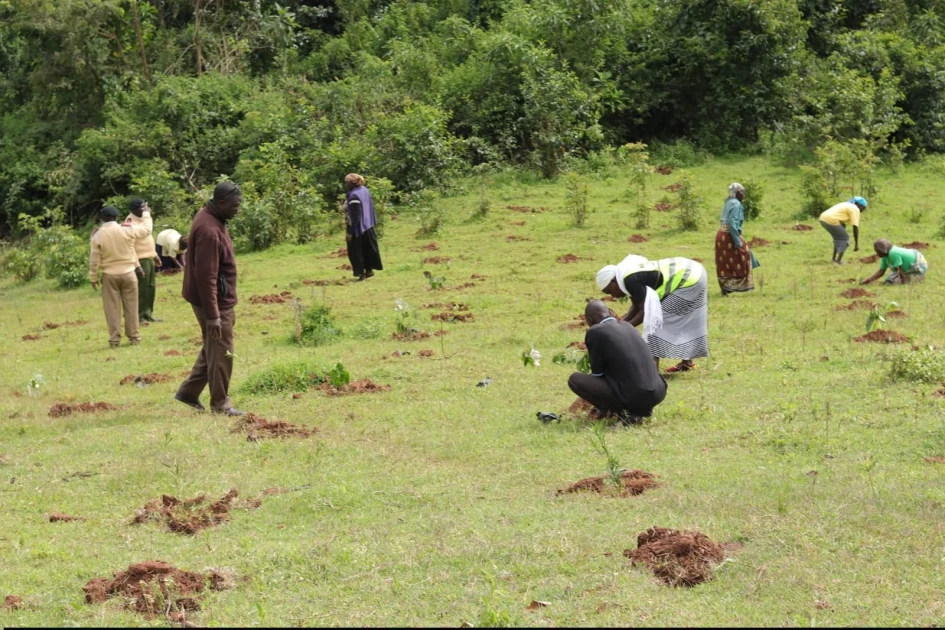
Residents participating in tree planting at Kibiri Forest in Vihiga.

Audio By Vocalize
Every planting season, she returns to the same acre her family has farmed for generations on the edge of Kibiri Forest in Vihiga County, western Kenya. She waits for the rains, plants maize and hopes this season will be better than the last. It rarely is.
"One acre used to feed my family," she says, rubbing dry soil through her fingers. "Now we harvest much less."
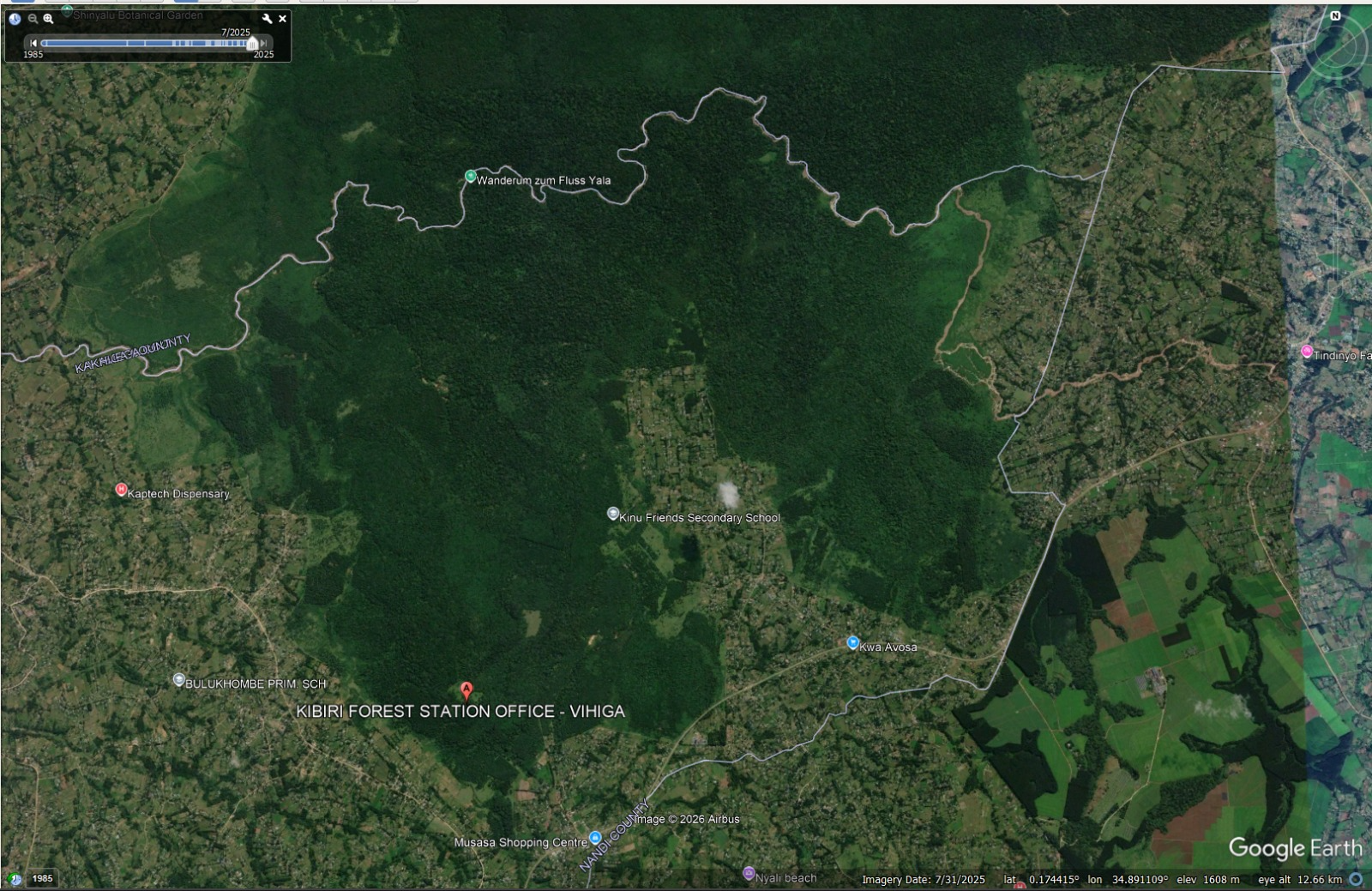
Many people blame the changing weather, but Khavere looks beyond the clouds - to Kibiri Forest.
"When the forest began disappearing," she says, "our farms changed too."
As a child, the forest was woven into everyday life. She gathered mushrooms after the rains, picked wild vegetables, collected medicinal plants and carried home bundles of firewood with her family.
Streams flowed throughout the year. Birds nested in indigenous trees while bees moved freely between the forest and nearby farms.
The forest was never separate from the farm. It was part of it. Fallen leaves blanketed the ground, feeding the soil beneath.
Trees shaded crops from the hottest sun, slowed strong winds and helped the earth hold moisture. Families planted once each year, guided by seasons they understood through generations of indigenous knowledge. A good harvest began long before the first seed entered the ground.
Today, much of that knowledge is fading as many families now rely almost entirely on maize. They plant the same crop on the same land season after season, yet every harvest seems smaller than the last.
"We used to clear bushes before planting," says Simon Lijuma Sambaya, another farmer living near Kibiri Forest. "Sometimes we burned them because it was faster. But the soil isn't the same anymore."
Agricultural scientists say burning vegetation destroys the living organisms that keep soil healthy. Growing maize continuously without allowing the land to recover gradually drains the soil of the nutrients crops need.
Population growth has compounded the problem. As families have expanded, farms have been divided into smaller plots, leaving little room to rotate crops or leave land fallow.
Meanwhile, Kibiri Forest has continued to shrink.
Without trees, heavy rain washes away fertile topsoil. Dry seasons feel longer. Streams become less reliable. What happens inside the forest increasingly determines what happens on the farm.
For families like Khavere's, the consequences extend beyond the harvest.
She remembers when meals came from many corners of the farm. Beans climbed alongside maize. Sweet potatoes spread beneath fruit trees. Millet, sorghum and indigenous vegetables filled cooking pots long before anyone spoke about balanced diets.
Today, maize often carries the burden alone.
Eric Ngereso, a dietitian at Kenyatta National Hospital (KNH), says that change affects far more than food production.
"When families depend almost entirely on maize, they may have enough to fill their stomachs but still miss many of the nutrients their bodies need," he says.
Those foods once supplied iron, zinc, vitamin A and other nutrients that support children's growth, strengthen immunity and keep families healthy.
"Healthy forests, healthy soils, healthy crops and healthy people are closely connected," Ngereso says.
That understanding is increasingly shaping how scientists, conservationists and farmers think about restoring degraded landscapes.
Around the world, governments are investing in restoring forests, rivers and farmland, recognising that repairing nature strengthens food production, protects biodiversity and helps communities adapt to a changing climate. Kenya has embraced that vision through its Nationally Determined Contributions (NDCs) under the Paris Agreement and President William Ruto's commitment to plant 15 billion trees by 2032.
Together, these initiatives aim to restore degraded landscapes, expand forest cover and promote climate-smart agriculture. Around Kibiri Forest, farmers hope those commitments will translate into healthier soils, more reliable harvests and more nutritious food for their families.
Khavere remembers how families selected the healthiest maize cobs after every harvest. They peeled back the husks, tied the cobs together and hung them above the kitchen fireplace, where gentle smoke protected the seed from weevils until the next rains.
"The maize was too bitter to make ugali," she says with a smile. "We kept it only for planting."
Families planted different crops together, returned crop residues to the soil, and protected indigenous trees that attracted bees, cooled the land and provided fodder for livestock. Today, scientists describe many of those practices as agroecology.
For Khavere, they were simply how farming was done.
Conservationists believe restoring indigenous trees to farms, protecting Kibiri Forest and rebuilding healthy soils could reverse years of declining productivity while safeguarding one of western Kenya's important biodiversity hotspots.
As another rainy season approaches, Khavere prepares her field once again. She still plants maize. She still hopes the rains will come.
But after watching the forest disappear, she knows rain alone cannot restore a harvest. A healthy harvest begins long before the first seed enters the ground. It begins with living soil, thriving forests and the countless connections between them.
For Khavere, restoring Kibiri Forest is about far more than saving trees. It is about ensuring children have enough nutritious food to eat, streams continue to flow, farms remain productive, and future generations inherit land capable of sustaining both people and nature.
Because when a forest is restored, it does more than grow trees. It gives a community the chance to grow again.
Join the Discussion
Share your perspective with the Citizen Digital community.
No comments yet
This discussion is waiting for your voice. Be the first to share your thoughts!