
Cyber resilience is the foundation for Africa’s next phase of digital growth, Mastercard whitepaper finds

Audio By Vocalize
Africa's digital economy is growing at
remarkable speed, opening new opportunities for people, businesses and
governments across the continent. Building strong cyber resilience will be key
to sustaining that momentum, according to the new Mastercard-commissioned
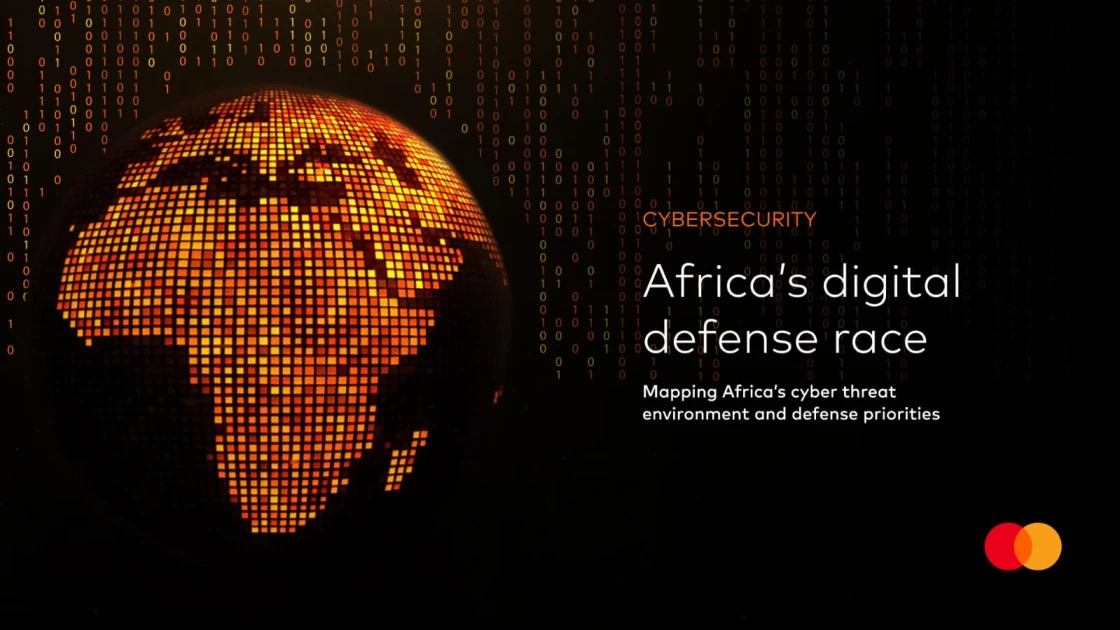
whitepaper, Africa’s Digital Defense Race.
The whitepaper highlights that
between 2016 and 2025, mobile money users grew 5.9 times, digital banking users
4.7 times and the e-commerce market 5.3 times. The findings come as Africa’s
digital payments economy is on track to reach USD 1.5 trillion by 2030.
However, cyber threat activity
grew at a similar pace over the same period, highlighting both the growing risk
facing Africa’s digital economy and the opportunity to strengthen the
governance, skills, infrastructure and collaboration needed to secure its
continued growth.
Shabir Ahmed, Senior Vice President, Customer Solutions
Center Lead, Africa, said: “Africa’s digital growth is creating real opportunity for
people and businesses across the continent, and protecting it has become a
leadership priority. As threats become more sophisticated and coordinated, our
response has to be just as coordinated. That is why we launched the Africa
Cybersecurity Center of Excellence, bringing the public and private sectors
together to share intelligence, knowledge and best practices. Building that
resilience together is how Africa continues to grow with confidence.”
Mastercard Cyber Insights recorded 69,236
observed cyber events targeting African organizations in 2025, equivalent to
roughly one event every eight minutes. Between 2016 and 2025, cyberattacks
across the continent increased by more than 421%, compared with
307% globally, the whitepaper finds.
The whitepaper shows how cyber
resilience priorities vary across Africa's diverse digital ecosystem. Nigeria, home to one of Africa's
largest fintech ecosystems, accounted for a significant share of observed
cyberattacks in Africa this year. South Africa’s concentrated financial
sector was the target of 12.6% of the continent’s observed attacks. Morocco, a
growing regional technology hub linking North Africa to Europe, has built one
of the continent’s more institutionalized cyber governance structures. In Kenya, the report highlights the
importance of strengthening resilience around the systems that support
financial inclusion and digital growth.
The whitepaper points to
talent as the clearest opportunity for investment. Africa has roughly 200, 000
cybersecurity roles waiting to be filled, a shortage equal to 23% of
its current cybersecurity workforce. The Africa Cybersecurity Center of
Excellence supports this by bringing security leaders and teams together to
share knowledge and best practices, and by helping organizations build
readiness through scenario-based exercises.
Collective action is already
delivering results. Between June and August 2025, Interpol’s Operation Serengeti 2.0
led to 1,209 arrests across 18 African countries and the recovery of USD 97.4
million.
Mastercard
approaches resilience through collaboration, working alongside governments,
financial institutions and businesses of all sizes. The Center of Excellence brings
together the public and private sectors to share threat intelligence, monitor
risk and strengthen collective defense across the continent, providing a
platform for the kind of coordinated response needed as Africa’s digital
economy grows.
Join the Discussion
Share your perspective with the Citizen Digital community.
No comments yet
This discussion is waiting for your voice. Be the first to share your thoughts!