
Corruption, terrorism, transnational crime dominate courts as DPP stands firm
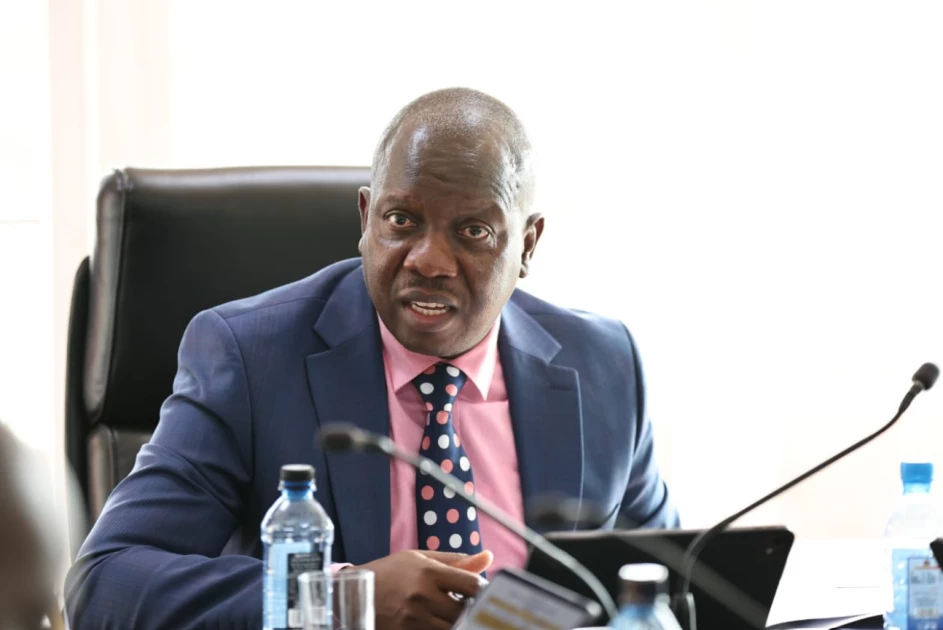
DPP Renson Ingonga during a past meeting. PHOTO | COURTESY

Audio By Vocalize
Corruption-related
cases dominated Kenyan courtrooms in 2025, a trend expected to persist into
2026, as the state pushed through a series of high-profile prosecutions amid
intense public scrutiny.
While convictions
remained selective, several landmark outcomes signaled a sustained drive to
hold powerful individuals and institutions to account.
As pressure
mounted to hold high-ranking individuals to account, Director of Public
Prosecutions (DPP) Renson Ingonga appeared to renew focus on corruption,
terrorism, cybercrime and extradition matters, reflecting an evolving crime
landscape in which technology-driven and transnational offences are
increasingly taking centre stage.
The most notable
conviction was that of former Kiambu Governor Ferdinand Waititu, who was found
guilty in a conflict-of-interest case.
The
Anti-Corruption Court fined him Ksh.53 million or, in default, sentenced him to
12 years’ imprisonment, and barred him from holding public office for a decade.
Ingonga maintains
the war against graft must be won, pointing ex-Governor Waititu’s case as move
in the right direction, as he appreciated the support of other agencies.
“The fight against
corruption has to be won and this conviction (Waititu) is a significant step in
the right direction. We thank other state agencies for the support in the
success of these convictions,” he stated.
The verdict was
widely seen as a litmus test for accountability among senior political figures.
Former Housing Minister
Amos Kimunya also returned to the legal spotlight after the Court of Appeal
overturned earlier acquittals in a long-running case involving the irregular
allocation of public land.
The decision,
secured after a successful challenge by the DPP, placed Kimunya on his defence
and revived a case that had lingered in the courts for years.
Another major
boost for the prosecution came in the case against former Nairobi Governor Mike
Mbuvi Sonko.
The
Anti-Corruption Court ordered him to stand trial over graft charges linked to
the alleged extortion of Ksh.20 million, following another successful appeal by
the DPP that reaffirmed judicial confidence in the prosecution’s evidence.
County governments
remained a focal point of anti-corruption efforts. Former Nyandarua Governor
Daniel Waithaka Mwangi was convicted and sentenced over procurement
irregularities, adding to a growing list of governors held criminally liable
for abuse of office.
In Trans Nzoia,
Governor George Natembeya was charged with the unlawful acquisition of Ksh.3.25
million, allegedly received through county payments to companies linked to him
in a conflict-of-interest scheme.
Procurement fraud
was also on the spotlight, as eight Tana River County officials and a private
firm were charged with willfully flouting procurement laws and undertaking a
project without proper planning, in cases that underscored persistent
weaknesses in public procurement systems at both county and national levels.
Meanwhile, former
Kenya Pipeline Company employees were convicted and fined Ksh.10 million each,
or sentenced to nine years in prison, for stealing petroleum products.
Courts also
ordered senior officials and companies to stand trial in the Ksh.209 million
substandard fertiliser scandal that rocked the nation, where soil amendments
were allegedly passed off as fertiliser.
In the health
sector, eight individuals and a medical facility were charged over the alleged
fraudulent acquisition of Ksh.7 million from the Social Health Authority (SHA).
Beyond Kenya’s
borders, extradition proceedings highlighted the country’s growing role in
international justice.
The High Court
declined to grant bail to Lebanese national Antoine Kassiss, wanted in the
United States on narcoterrorism and money laundering charges.
Extradition orders
were also secured against Afghan national Abdul Zahir Qadeer and US citizen
Hudeife Muhumed Mire, while proceedings commenced against British national
Robert James Purkiss over the 2012 murder of Agnes Wanjiru in Nanyuki.
Murder
prosecutions involving state officers marked another defining chapter. Several
senior police officers were charged in cases that had long drawn public
outrage, including the killing of Baby Samantha Pendo that occurred during the
2017 post-election violence.
Separately,
multiple officers from different agencies were charged with the murder of two
Indian nationals and a Kenyan citizen linked to the disbanded Special Service
Unit.
The DPP also
secured a significant institutional win at the Supreme Court, which dismissed
the final appeal by Ruth Wanjiku Kamande, affirming her murder conviction
linked to the death of her boyfriend ten years ago.
Momentum continued
in other high-profile trials, including those involving former Migori Governor
Okoth Obado and businesswoman Sarah Wairimu Cohen.
In a landmark move
for professional accountability, a surgeon and hospital directors were charged
with manslaughter following a patient’s death.
The year closed
with major victories in terrorism prosecutions, including lengthy sentences for
suspects linked to the Dusit D2 attack and the Garissa ambush.
Separately, the
DPP closed one phase of the Shakahola case involving controversial preacher
Paul Mackenzie after calling 75 witnesses, with rulings and parallel trials
still pending.
Leave a Comment