
Chronic spenders: How gov’t is living beyond its means as Kenyans tighten belts

Audio By Vocalize
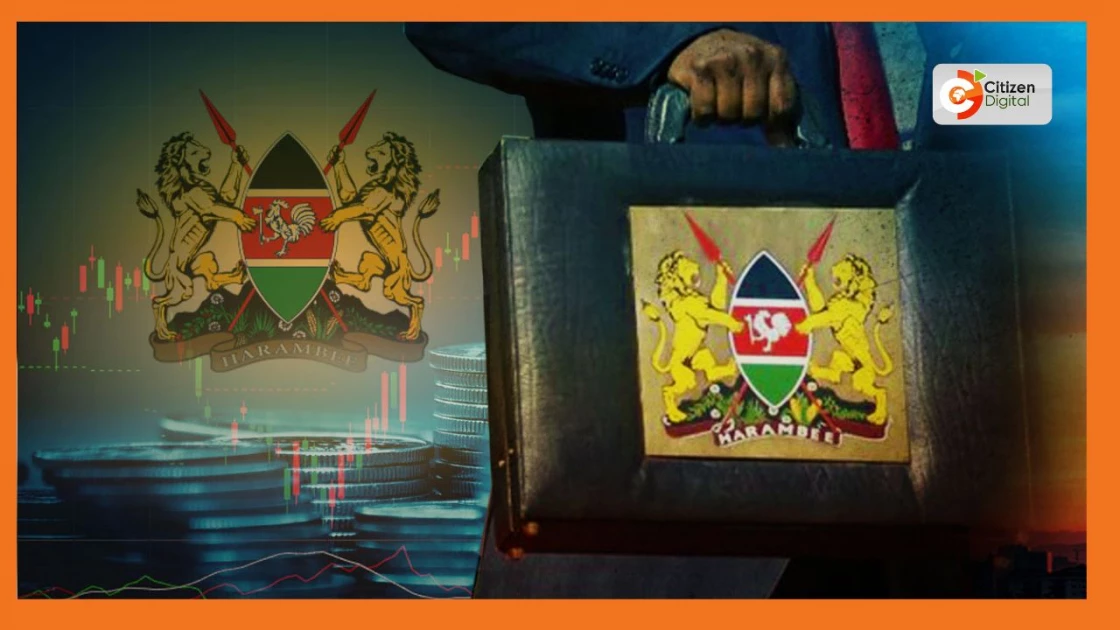
Backed up by numbers, buried in 418 pages, the COB report reveals a pattern that should trouble every taxpayer.
The National Government Budget Implementation Review Report for the First Nine Months of FY 2025/26 was submitted to Parliament in May 2026.
It shows how the government spent far beyond what Parliament approved in key offices at the center of power.
How it burned through an emergency constitutional provision, Article 223, at nearly five times the rate of the previous year, and sat atop a mountain of Ksh.465.87 billion in unpaid bills even as it found money for AFCON football subscriptions and hospitality at the Deputy President's office.
The headline numbers are striking. Total national government expenditure for the nine months stood at Ksh.3.21 trillion against a budget of Ksh.4.69 trillion.
Public debt has swollen to Ksh.12.82 trillion — equal to 69.9 per cent of GDP, well above the 55 per cent ceiling approved by Parliament.
The deficit is being financed, in part, through the very same Article 223 mechanism that is being misused to fund day-to-day office operations.
Key Provisions of Article 223
Article 223 of the Constitution of Kenya has four pillars upon which the State can access Supplementary Appropriation, which allows the national government to spend unappropriated money for urgent, unforeseen, or insufficient budget needs.
First it sets the conditions for spending; it follows that the national government can spend money without prior parliamentary appropriation if an amount for an approved purpose is insufficient, or a sudden need arises for an unbudgeted purpose such as witnessed during the Covid-19 outbreak in 2020.
The money is therefore drawn from the Contingencies Fund for that particular purpose.
Secondly, Article 233 calls for Parliamentary approval and lays it down that the government must seek parliamentary approval within two months after the first withdrawal of the funds. If Parliament is in recess, this must be done within two weeks after it reconvenes.
Thirdly, a formal Appropriation Bill must be introduced in parliament once the National Assembly approves the spending, to regularize the withdrawal.
Lastly, it sets spending limits which legally restricts the government from spending more than 10% of the originally appropriated sum in any financial year under this Article, unless Parliament approves a higher percentage in special circumstances.
The State House: 36% Over Budget, Ksh.4.45 Billion Through the Back Door
State House was allocated Ksh.8.58 billion for FY 2025/26. By the end of March 2026, nine months into the financial year, with a full quarter still to run, it had already spent Ksh.11.68 billion.
That is an absorption rate of 136 per cent, meaning State House had already blown past its entire annual budget with three months to spare.
Drilling deeper, the "Coordination of State House Functions" sub-programme vote-head, which covers the day-to-day running of the Presidency, recorded an absorption rate of 140 per cent against an annual estimate of Ksh.8.13 billion. Expenditure hit Ksh.11.40 billion.
The Controller of Budget's explanation is terse but important: the over-expenditure "was attributable to additional funding of Ksh.4.45 billion under Article 223 of the Constitution in favor of the State House for other operating expenses."
The term, "other operating expenses," remains ambiguous and a bottomless pit. The report offers no further itemization.
Article 223, which is constitutionally meant for unforeseen emergencies, was used to push an extra Ksh.4.45 billion through the State House's books, on top of a budget already set at nearly Ksh.8 billion for running costs that could not be classified as anything more specific than "operations."
The COB report does not call this an emergency. Kenya's taxpayers are entitled to ask what exactly cost the State House an extra Ksh.4.45 billion in operating expenses that no one foresaw when the budget was formulated.
The Deputy President's Office: 128% on "Coordination," Ksh.507 Million for Hospitality and Hired Cars
The office of Deputy President Kithure Kindiki fared no better. Its overall absorption rate hit 114 per cent, with the "Coordination and Supervision" sub-programme vote-head, the DP's core operating function, posting a staggering 128 per cent absorption rate.
Expenditure on Coordination and Supervision alone reached Ksh.2.87 billion against an estimate of Ksh.2.24 billion.
Nyakang’o identifies the cause without ambiguity: additional funding of Ksh.507.84 million was channelled through Article 223 to "cater for hospitality supplies and services, hire of transport and other operating expenses." What could be hospitality… hired cars, drinks, food? All these funded through a constitutional emergency provision.
This is not a one-off aberration. It is a pattern that the COB is clearly growing frustrated with. The report notes pointedly that "some of the approvals under Article 223 of the Constitution were routine in nature, intended to support day-to-day office operations", and that the Controller sought clarification from accounting officers on whether these spending requests met the constitutional criterion of being "unforeseen and of an emergent nature."
Parliament: Ksh.19.37 billion Spent in Nine Months
The National Assembly's FY 2025/26 budget stands at Ksh.28.57 billion, an increase from Ksh.25.72 billion in the prior year.
By the close of March 2026, it had spent Ksh.19.37 billion, an absorption rate of 68 per cent. The report notes that "Constituency office expenses" accounted for Ksh.3.02 billion of this spending in the first nine months — a significant line item for which the report provides no itemized breakdown.
The National Assembly's performance on the legislative side tells its own story. Against an annual target of 100 bills to be processed, only 53 had been completed in nine months. Of 150 planned chamber sittings, only 76 had been held.
Lawmakers answered only 126 of the 300 questions scheduled. Yet the Ksh.28.57 billion budget marches on, and petitions, a measure of constituents seeking help from the House, exceeded their target by 351, recording 451 against a target of 100, suggesting the gap between what citizens need from Parliament and what Parliament is actually delivering is wide.
The Senate allocated Ksh.8.20 billion, and spent KES.6.48 billion (79 per cent) by end of March. Its Liaison and Outreach sub-programme spent at 154 per cent of estimates, with the excess attributed to a Ksh.45 million re-allocation from the General Administration vote, in other words, the Senate quietly moved money from administration to outreach, which translated into nine conferences against a target of four and 86 visiting delegations against a target of 60. Impressive outreach numbers; less clear value for money.
The Parliamentary Joint Services, which manages shared facilities for both Houses, spent Ksh.6.29 billion against an allocation of Ksh.8.38 billion.
Its "Bunge Tower" office block project, broke ground in July 2014, is now 98 per cent complete but still consuming money in 2026, twelve years and counting.
A land purchase project for a Parliamentary precinct, which began in 2022, sits at just 37 per cent completion.
Article 223 as a Parallel Budget
Across the executive, the use of Article 223, which is constitutionally reserved for emergencies, bears a new meaning away from its noble purpose and has become what the Controller of Budget describes as a parallel budget mechanism.
The numbers are arresting. In the first nine months of FY 2025/26, the Controller of Budget approved Ksh.206.81 billion in withdrawals under Article 223.
This compares to just Ksh.42.22 billion approved in the same period of FY 2024/25, a near-fivefold increase in a single year.
The total approved by the Cabinet Secretary, National Treasury, was Ksh.276.76 billion. The constitutional ceiling is 10 per cent of the gross annual budget of Ksh.4.69 trillion, and the government is within that limit numerically.
But Nyakang’o's observation that the money is being used for routine operations, not emergencies, is a serious constitutional concern.
The following agencies accessed Article 223 funds for reasons that stretch the meaning of "unforeseen emergency":
State Department for Sports: The recurrent budget was Ksh.1.63 billion. By March 2026, the department had already spent Ksh.4.91 billion on recurrent expenditure, which was 302 per cent of the budget.
The over-absorption was driven by Article 223 funds used to pay subscription fees for the Africa Cup of Nations (AFCON). The AFCON is a biennial tournament whose schedule is set years in advance.
Yet its subscription fees were apparently not budgeted, and the department had to access emergency constitutional funding to pay them.
The sub-programme vote-head covering "Sports Training and Competitions" alone recorded a 578 per cent absorption rate, spending Ksh.4.34 billion against an estimate of Ksh.750 million.
All while only 6 national teams participated in international competitions (against a target of 45), and only 600 athletes were enrolled in sports academy training (against a target of 2,700).
State Department for Special Programmes: This department, which handles drought response, recorded a recurrent absorption rate of 2,037 per cent, spending Ksh.9.94 billion against an estimated Ksh.488 million.
This is largely justifiable; the government injected Ksh.3.69 billion through Article 223 for drought intervention. Food aid for drought is arguably a genuine emergency.
But the department's original budget allocation of Ksh.488 million for recurrent spending, for a State Department tasked with emergency preparedness, raises questions about whether Kenya really plans for predictable crises.
Office of the President: it spent Ksh.4.93 billion (89 per cent overall absorption) but with the development budget recording 109 per cent absorption, used to partially settle historical pending bills from the defunct Nairobi Metropolitan Services (NMS).
The NMS bills, Ksh.13.07 billion in outstanding payables, remain one of the largest single items in the government's unpaid liabilities. These are not new obligations.
They are the financial residue of a dissolved government entity, and they continue to drain the Executive Office.
Office of the Deputy President recurrent: As noted above, 114 per cent overall absorption. Ksh.507.84 million in Article 223 funds for hospitality and hired vehicles.
State Department for Culture, the Arts and Heritage: Tapped Article 223 funding to "support cultural festivals." Ksh.105 million approved.
State Department for Youth Affairs and Creative Economy: Used Article 223 to "facilitate the celebration of International Youth Day (IYD) and National Youth Day."
Youth Day is held every year on the same date. It is not unforeseen; it should have been budgeted, that is the law.
Projects Started in 2013 Still Running. And Running.
Beyond the Article 223 profligacy, the CoB report catalogues a graveyard of unfinished projects that have become permanent fixtures of the national budget.
The Modernisation of the Government Press project was started in July 2013. Thirteen years later, it is 10 per cent complete, having absorbed Ksh.1.26 billion with an estimated project value of Ksh.12.51 billion.
The Refurbishment of Kisii State Lodge started in July 2019 and is 3 per cent complete.
The State House Mechanical Garage, commenced July 2020, is 4 per cent complete.
The Refurbishment of State House Mombasa (main house and fence) has consumed Ksh.459 million of a Ksh.1.39 billion budget since 2016 and is 33 per cent complete.
Meanwhile, the Refurbishment of Harambee House Main, the seat of the Executive, started in July 2015, was supposed to end in June 2026, and is only 36 per cent complete. It will miss its completion deadline.
The COB notes the problem; it says the "MDAs should prioritize the implementation of ongoing projects by freezing the commencement of new projects." The same recommendation appears in previous reports. The same projects drag on; it has become a perennial song.
Ksh.465.87 billion in Unpaid Bills
Behind the over-expenditure figures lies an even more troubling reality: the government owes Ksh.465.87 billion to contractors, suppliers, and its own employees as of March 31, 2026.
This includes Ksh.40.21 billion in personal emoluments arrears, money owed to workers. It includes Ksh.39.64 billion in unremitted National Hospital Insurance Fund contributions, deducted from employees' salaries but never forwarded to NHIF.
Ksh.26.50 billion in unremitted Pay As You Earn taxes, deducted from employees but not paid to the Kenya Revenue Authority. Ksh.9.22 billion in unremitted SACCO deductions sits on the same pile.
The National Youth Service alone owes Ksh.14.27 billion to creditors. The Nairobi Metropolitan Services' ghost, the defunct body, trails Ksh.13.07 billion in unpaid bills behind it.
The COB's recommendation is clear: "pay the verified pending bills on a First-In-First-Out basis to unlock funds into the economy."
The recommendation has appeared in previous reports. The bills keep accumulating, and it has become a game of revolving doors.
The Bottom Line
What the Controller of Budget's nine-month report for FY 2025/26 reveals is not merely accounting irregularity.
It reveals a government in which half a trillion shillings in unpaid bills continues to strangle contractors, suppliers, and the very government employees whose deductions have been taken but not remitted.
The COB recommends that "expenditure under Article 223 should be used strictly in line with the requirements of its use, which are unforeseen and of an emergent nature." It further recommends a "review of the legislative framework" to strengthen controls.
What the report cannot do is compel the Executive to comply. That is Parliament's job. And Parliament, which has held only 76 of its 150 scheduled sittings in nine months, will need to decide whether it is up to the task.
Join the Discussion
Share your perspective with the Citizen Digital community.
No comments yet
This discussion is waiting for your voice. Be the first to share your thoughts!