
Amid protests, alliances reshape the crisis in Southern Yemen
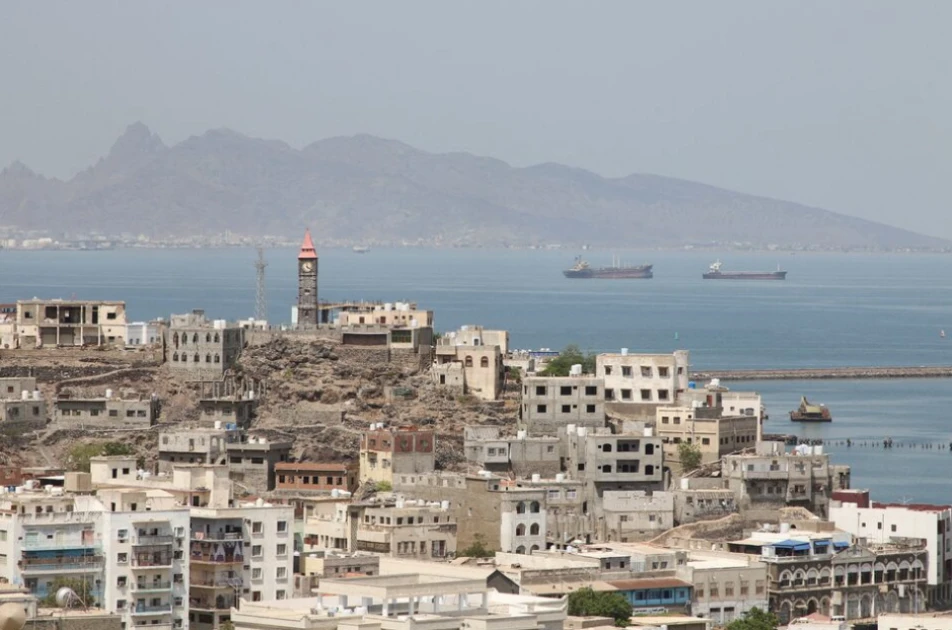
A view of Big Ben Aden, a clock tower built beside Aden harbor during the period that Aden, Yemen was a colony within the British Empire, September 9, 2022. REUTERS/Fawaz Salman

Audio By Vocalize
Over recent days, popular protests have intensified across several districts of Aden, demanding improvements to electricity services and an end to prolonged power outages which demonstrators described as unprecedented in the history of the South, coinciding with soaring temperatures.
On Wednesday, media reports confirmed the death of one
protester and injuries to others after Saudi-backed factions reportedly used
live ammunition against demonstrators, triggering widespread public outrage
across southern Yemen.
Activists on social media circulated accounts regarding
incidents in the Crater district, which coincided with protests in the area.
They asserted that participants had organized a peaceful demonstration without
acts of vandalism or tire burning, and that security forces dispersed the
gatherings by force, according to circulated reports.
Activists called for the release of all detainees and the
return of confiscated equipment. No official comment has yet been issued by the
relevant authorities regarding these allegations or the details of the measures
that accompanied the events in the Crater district.
These protests come at a time when several southern
governorates are experiencing deteriorating living conditions, rising prices, a
salary crisis, and transformations across all fronts that the South has
witnessed since the beginning of the current year.
Among the most significant developments witnessed in southern
Yemen is the return of the Muslim Brotherhood, through its Islah Party, to the
political scene. Its members have been appointed to ministerial portfolios,
most notably the Ministry of Defense, for which Saudi Arabia selected Al-Aqeeli.
Reports speak of a “systematic infiltration” led by the group
within Yemeni state institutions, exploiting the state of chaos imposed by the
war to reshape the administrative and military apparatus along narrow
organizational loyalties, far removed from any national or institutional
standards. Observers also refer to a path of “soft empowerment” pursued by the
group, whereby it did not limit itself to political participation but worked to
reengineer the state's structures from within.
Meanwhile, an analytical report by writer Fernando Carvajal
warned that recent Saudi policies in Yemen, particularly in Hadramawt
governorate, could contribute to creating a political and security vacuum that
would allow Al-Qaeda to reorganize and reemerge. He noted that “the coalition
led by the Kingdom of Saudi Arabia since the launch of Operation Decisive Storm
has undergone notable transformations, particularly following the airstrikes
that targeted forces loyal to the Southern Transitional Council in December
2025.”
He affirmed that “these developments have reinforced the
influence of the Yemeni Congregation for Reform Party, affiliated with the
Muslim Brotherhood, in southern areas that had previously been liberated from
Houthi control, provoking widespread rejection among southern forces.”
He also referred to meetings that brought together tribal and
political figures affiliated with Islah and local leaders, considering that
this rapprochement could raise concerns about the overlap between political
influence and former extremist networks.
The report further emphasized that weakening the Southern
Transitional Council could lead to counterproductive outcomes, given what it
described as the council’s broad popular representation in the South, warning
that any security or political vacuum could be exploited by extremist groups
seeking to rebuild their networks.
Meanwhile, reports indicate that the Brotherhood’s presence
has not been confined to the civil administration but has extended into the
military establishment, which has reportedly become an arena for redistributing
influence. Senior military ranks have allegedly been granted to individuals
lacking professional qualifications in exchange for organizational loyalty,
weakening the army’s command structure and transforming it from a national
institution into a penetrated entity serving partisan agendas.
Khabar News Agency pointed out that “even more dangerous is
what reports revealed regarding the phenomenon of ‘ghost soldiers,’ whereby
hundreds of thousands of names were included on payroll lists despite having no
actual presence on the ground, allowing billions of riyals to be diverted to
financing networks linked to Brotherhood leaders, in one of the largest
financial corruption operations in Yemen’s modern history.”
Observers assert that “this pattern of governance cannot be
separated from a broader strategy adopted by the Muslim Brotherhood in conflict
zones, based on exploiting chaos to rebuild influence through state
institutions rather than outside them.”
Yemeni activist Anas Al-Khalidi spoke of what he described as
organized movements led by the Muslim Brotherhood to reposition itself within
the authorities, stressing that the organization seeks to exploit the
complexities of the conflict to secure political gains that are detached from
the interests of the state. He noted that the group relies on dual tactics,
combining public rhetoric in support of stability with covert efforts to expand
its influence within decision-making circles.
Observers believe that these movements are part of a broader
strategy employed by political Islamist organizations in conflict environments,
one that relies on leveraging crises to strengthen organizational and economic
influence, benefiting from the absence of the state and the weakness of
institutions.
At the same time, calls are growing within political and media
circles to dismantle this influence and restore the concept of the national
state, free from the dominance of groups operating across institutions.
According to media reports, the continuation of this model threatens not only
the structure of the Yemeni state but also opens the door to reproducing chaos
in a more complex and dangerous form.
Meanwhile, recent military appointments have sparked widespread
controversy, with critics arguing that they included individuals lacking
military qualifications or linked to extremist backgrounds. They warned against
what they described as the “Talibanization of the army” and the transformation
of the military institution into a tool for perpetuating conflict and keeping
Yemen in a state of weakness and division.
Reports point to the growing role of Salafi currents within
military formations supported by the coalition, with dozens of predominantly
Salafi brigades deployed across several southern governorates and the western
coast.
Yemeni writer Bushra Al-Maqtari stated that “empowering the
Salafi force at the expense of political forces means granting it control over
both the political and civil spheres, which constitutes a catastrophic danger
to the future of Yemen and its people.”
She added that “the pragmatism unconstrained by any political
directives, and subject to neither political nor even national restraints other
than loyalty to the ruler—that is, to the foreign intervening party—even if it
has represented a regressive trajectory for the Salafi group, may lead it into
the traps of opportunism, as well as contradiction and duality between the
national context and the priorities of regional interveners.”
Meanwhile, analysts believe that Saudi Arabia, in the absence
of a national army capable of maintaining order, has succeeded in transforming
the Yemeni Salafi movement into a “pliant force” and a valuable card in its
hands. From Dammaj to Aden, and from religious advocacy to militarization, the
coming confrontation with the Houthis may be the benchmark that determines
whether this “obedient” force will remain a tool in the hands of its creator,
or become a new master on the battlefield.
Join the Discussion
Share your perspective with the Citizen Digital community.
No comments yet
This discussion is waiting for your voice. Be the first to share your thoughts!